

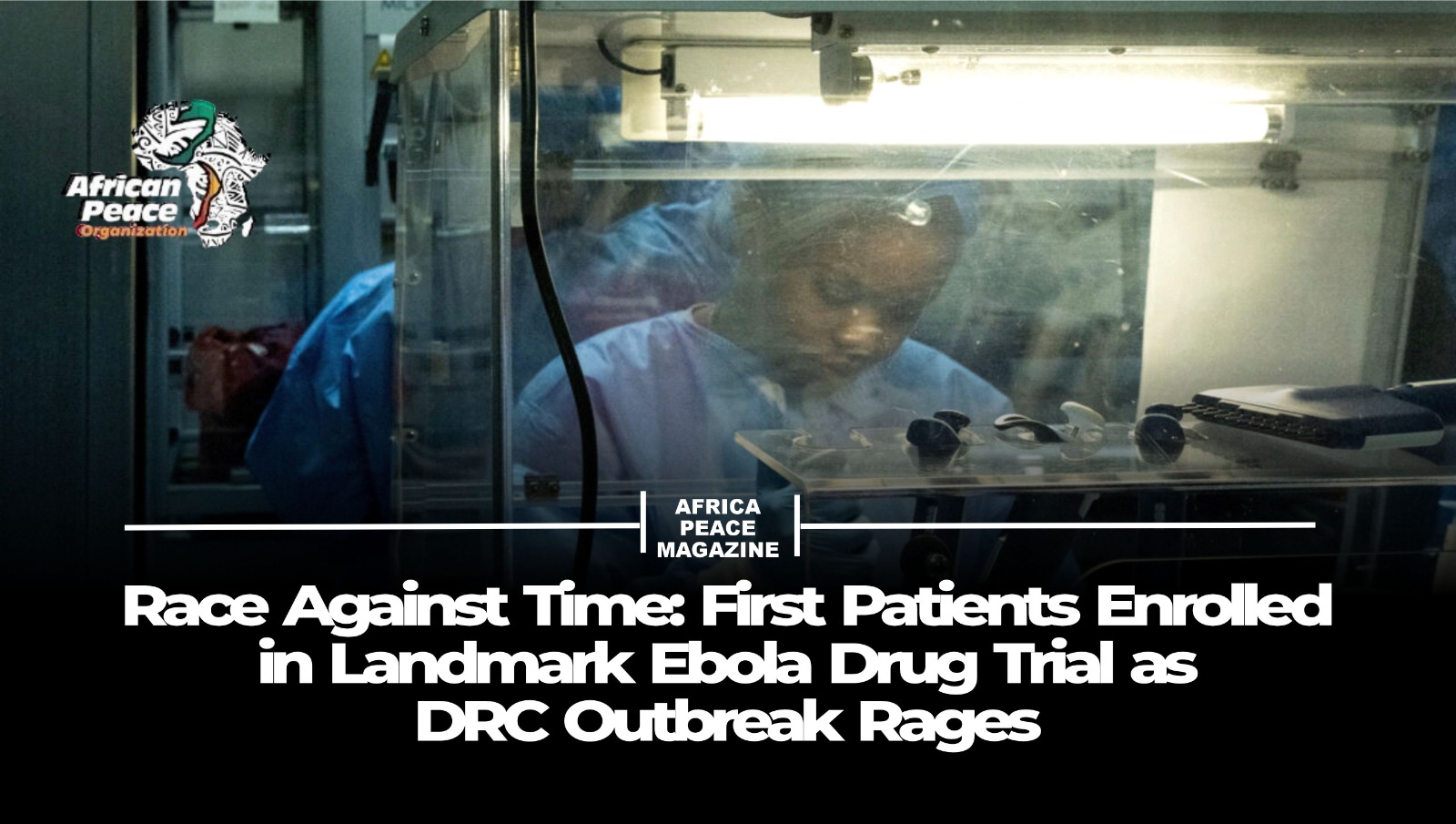
Scientists have enrolled the first patients in a treatment trial for the Ebola outbreak sweeping through the Democratic Republic of Congo, moving at record speed in a bid to find the first approved drug for the deadly Bundibugyo strain of the virus.
The trial began just six weeks after the World Health Organization declared the outbreak a public health emergency of international concern on 17 May — an unusually fast turnaround for this kind of research. As of 9 July, the outbreak had caused 1,792 confirmed cases and 625 deaths, with the WHO saying the epidemic remains in its expansion phase.
In Bunia, capital of the hard-hit Ituri province, residents say the crisis is taking a heavy toll. Local banana seller and mother of three Neema Haba said families are being pushed to the financial brink as the outbreak disrupts daily life.
The response depends heavily on identifying and isolating cases and tracing contacts, but only about 75% of known contacts are currently being tracked, hampered by mistrust of authorities and a highly mobile population. Adding to the strain, some frontline burial workers stopped work this week over unpaid wages. Ovide Maliabo, a driver on one of the burial teams, said he and his colleagues have faced hostility and even violence from communities, while team leader Bahati John said he lost a tooth in an attack and has gone unpaid since the response began in mid-May. Authorities say payments have since been made, though it remains unclear whether all activities have resumed.
The newly launched Partners trial is testing two drugs — the antiviral remdesivir and the monoclonal antibody MBP134 — either alone, in combination, or against standard supportive care. Professor Laurens Liesenborghs of the Institute of Tropical Medicine, Antwerp, who is running the trial in Ituri, said both drugs have shown effectiveness against the Bundibugyo strain in animal studies and researchers now need to confirm whether they can meaningfully cut mortality in humans, potentially by a margin similar to the 50%-to-35% drop seen with monoclonal antibodies during past outbreaks of the more lethal Zaire strain.
Around 700 to 1,000 patients are expected to be needed for a conclusive result, and the WHO says enough doses have been donated by Gilead Sciences and the US government to treat 1,200 patients. Pregnant and breastfeeding women, often excluded from medical research, are being allowed to enrol given the high risk Ebola poses to their survival.
Professor Amanda Rojek of the University of Oxford, the trial’s international lead investigator, credited strong scientific leadership within the DRC’s National Biomedical Research Institute for helping launch the trial in just six weeks, compared with more than a year during the 2014-16 West Africa outbreak. A separate trial is also starting this week to test whether the drug obeldesivir can prevent infection in people who have been in contact with confirmed cases, though Africa CDC says it still needs roughly $12m of the $18m required to proceed.
Source: theguardian.com