

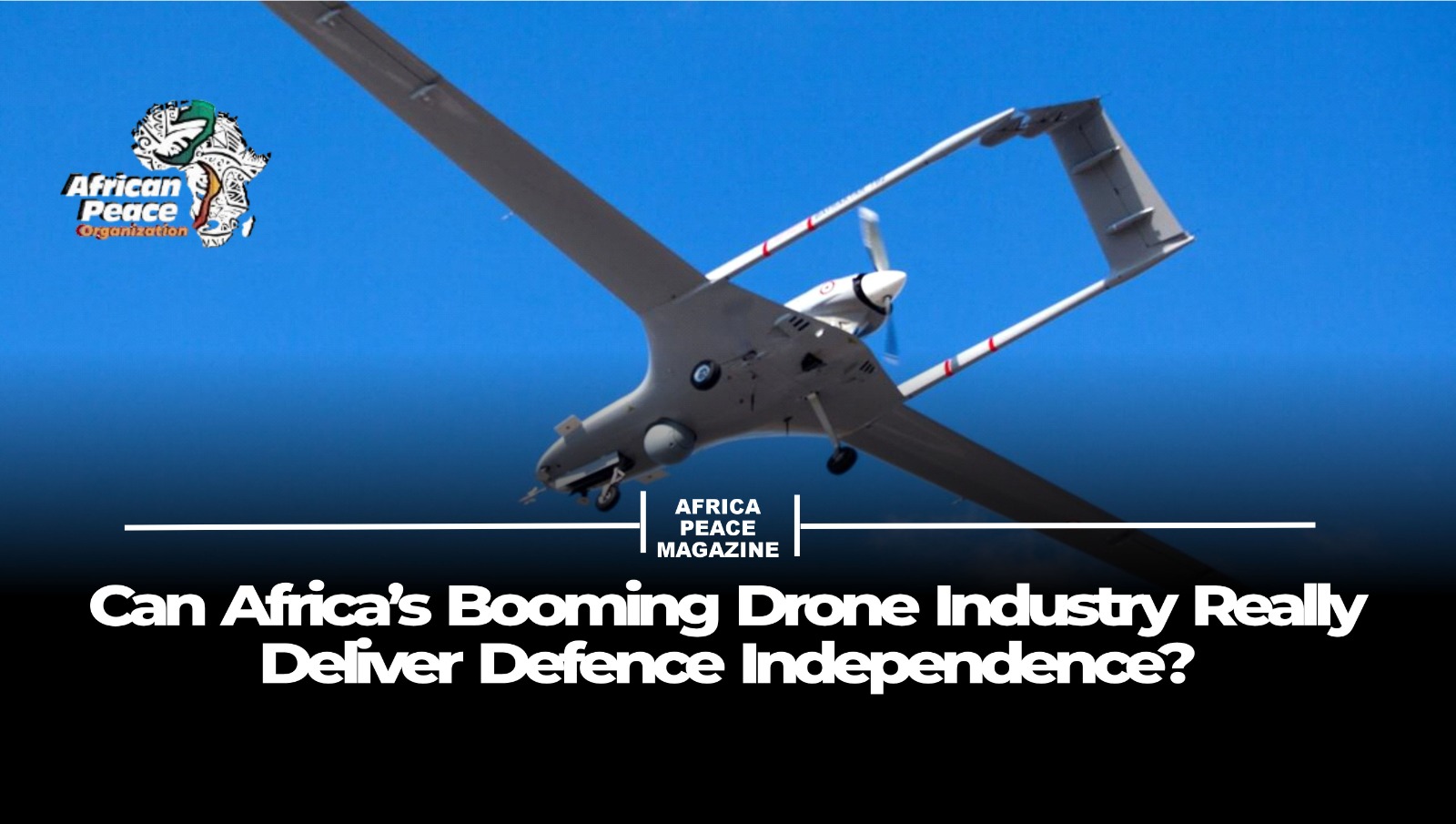
Across Africa, homegrown defence technology is on the rise, but experts warn that manufacturing capability alone will not deliver true defence sovereignty for the continent.
For decades, African militaries have relied heavily on foreign suppliers — Turkish drones, Chinese surveillance systems and Russian fighter jets among them — leaving the continent largely a buyer rather than a producer of security technology. Nigerian start-up Terra Industries, founded in 2024 by Nathan Nwachuku and Maxwell Maduka, is among a new wave of companies attempting to change that. Operating from facilities in Abuja and Accra, the company designs and manufactures drones, autonomous surveillance towers and unmanned ground vehicles, sourcing more than 70% of its components locally, including its own software, airframes and battery packs.
Terra says its systems currently protect infrastructure worth around $11bn, including power plants, mines and oil refineries, across eight African countries and Canada. Chief executive Nwachuku told Al Jazeera that demand varies by region, from maritime surveillance in West African coastal states battling piracy to persistent aerial monitoring in areas facing insurgency and porous borders. The company’s second production facility, based in Ghana, is set to become Africa’s largest drone manufacturing hub, with capacity to produce 50,000 units annually by 2028.
The company has attracted significant investor interest, raising $34m in seed funding from backers including 8VC, Lux Capital and Valor Equity Partners — investors also behind firms such as Anduril and SpaceX. Terra’s director of communications, Tage Kene-Okafor, said the funding round closed in under two weeks, a pace he described as rare even by global standards.
The rise of companies like Terra comes as drones play an increasingly central role in African conflicts. According to the Armed Conflict Location and Event Data project, the al-Qaeda-linked coalition JNIM has carried out more than 100 drone attacks in Mali and Burkina Faso since 2023, with 2025 recording the highest number yet. Terra says its Kama interceptor drone, capable of speeds up to 300kph, was built specifically to counter this growing threat in environments where conventional air defence is unavailable or too costly.
Still, analysts caution that building factories is not the same as achieving strategic independence. Janice Greaver of the Pan African Sustainable, Innovation and Development Associates argued that local sourcing figures mean little without clarity on who controls the resulting intellectual property and who benefits from it, warning that unchecked private investment in defence technology risks simply replacing dependence on foreign suppliers with dependence on unaccountable domestic capital. Whether Africa’s growing drone industry translates into genuine sovereignty, she said, will depend on the accountability structures governments build around it — not just the technology itself.
Source: Aljazeera.com