

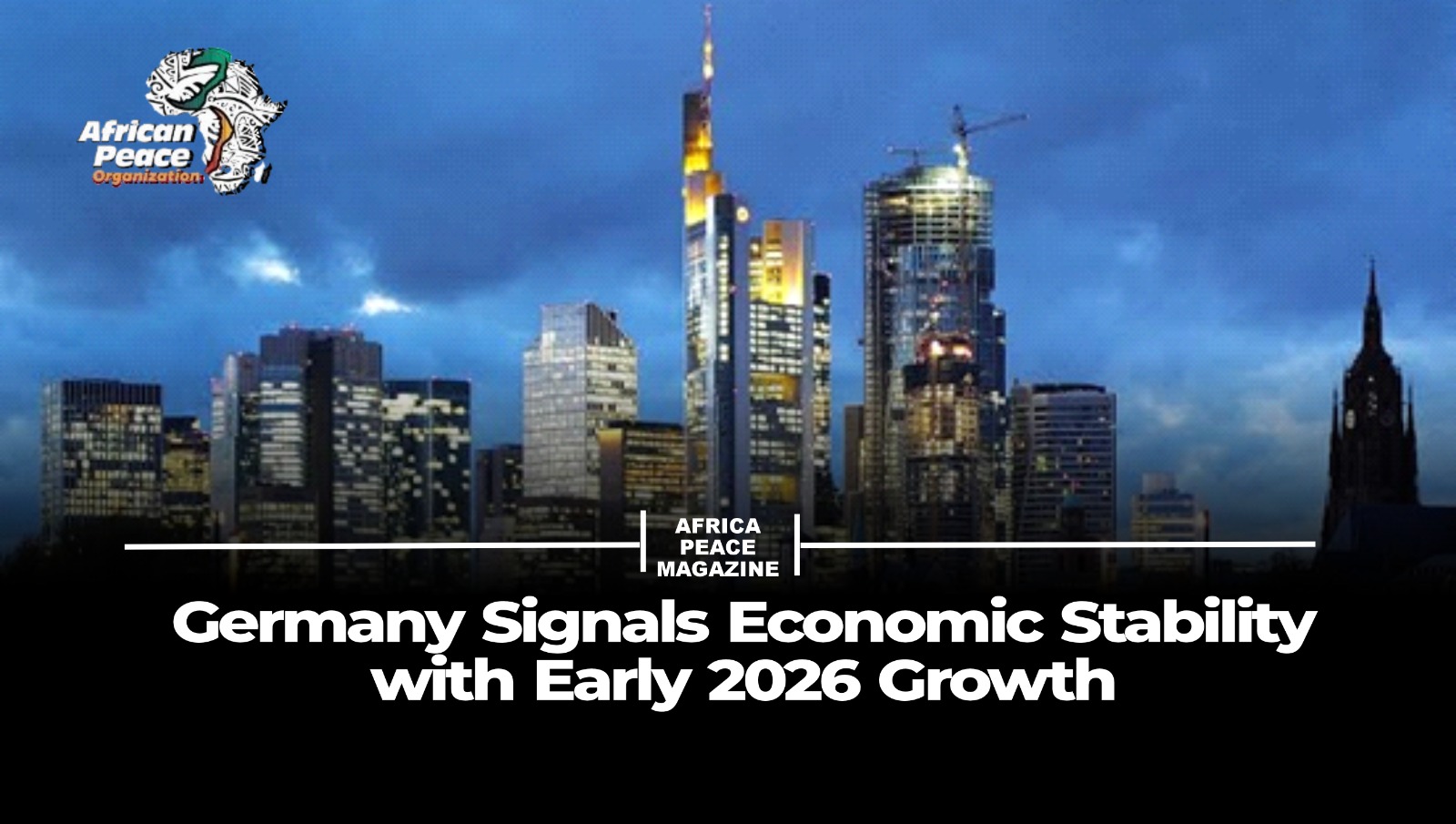
Europe’s largest economy, Germany, is offering a reassuring signal to global markets after reporting economic growth in the first quarter of 2026. At a time when many economies are navigating uncertainty, this development stands out as a sign of resilience and stability.
The growth has been driven largely by improvements in manufacturing and service sectors, both of which are critical to Germany’s economic structure. Increased production activity and steady consumer demand have contributed to this upward movement.
However, the picture is not entirely uniform. While economic output is rising, there has also been an increase in unemployment levels. This suggests that while businesses are growing, the benefits are not yet evenly distributed across the workforce.
Economists describe this as a transitional phase one where economies are adjusting to new realities such as automation, digitalization, and evolving global supply chains. These structural shifts often take time to translate into widespread job creation.
Despite these mixed signals, Germany’s performance remains a positive indicator for Europe as a whole. It reinforces the idea that even in periods of adjustment, strong economic foundations can support gradual and sustainable growth.