

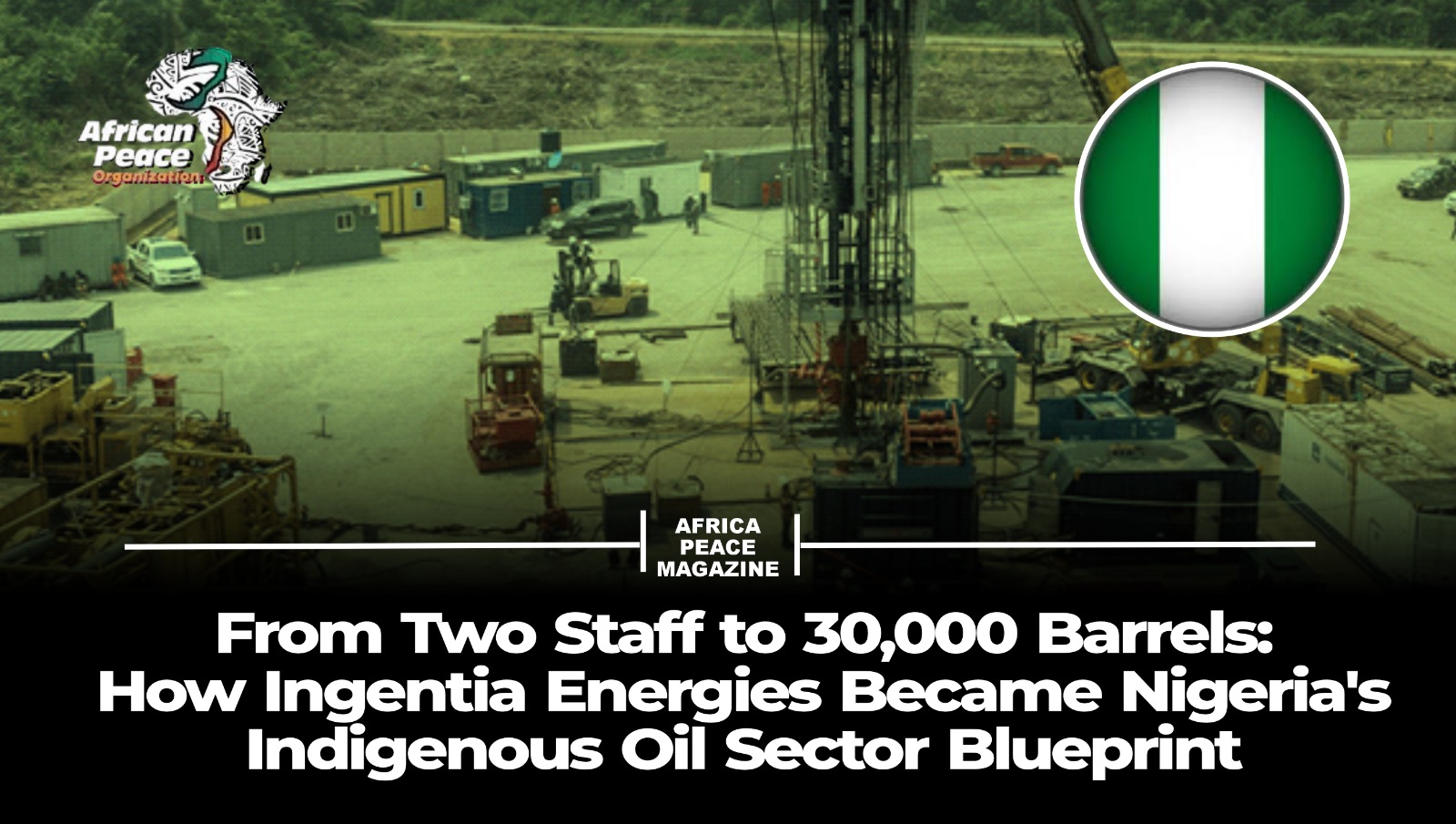
Nigerian independent oil producer Ingentia Energies has unveiled a bold expansion plan to scale production from current levels to 30,000 barrels per day by 2030, backed by fresh debt financing from a local bank, a new gas commercialisation deal, and the full support of the Nigerian Upstream Petroleum Regulatory Commission — a trajectory that industry stakeholders are holding up as a template for indigenous participation in the country’s upstream sector.
Chairman Valentine Ugbeide revealed the growth targets at a high-level meeting with NUPRC Commission Chief Executive Oritsemeyiwa Eyesan in Abuja, where he outlined a multi-year strategy anchored by aggressive drilling, infrastructure investment, and complete elimination of gas flaring before the end of this year. Ingentia was the first company to convert a Petroleum Prospecting Licence to a Petroleum Mining Lease under the 2020 Marginal Field Licensing Round — a distinction that placed it at the frontier of the country’s indigenous ownership agenda under the Petroleum Industry Act.
“Egbolom has become a role model that mirrors what indigenous companies can achieve despite obstacles. Our success should serve as a blueprint for other local firms,” Ugbeide said, describing the journey from a company that began with just two staff members to one now employing over 100 direct and indirect workers. The company is targeting 7,000 barrels per day by June this year, scaling to 30,000 barrels per day by the end of the decade, and plans to drill a minimum of two wells annually supported by fresh seismic campaigns targeting deeper reservoir horizons.
A significant vote of confidence came from the domestic banking sector: a local financial institution recently extended debt financing to Ingentia after reviewing the company’s operational track record, which includes consistent royalty payments and zero defaults on gas flare penalties. “We got debt funding from a local bank last week to continue our activities. They saw our performance and began pursuing us because of what we have achieved,” Ugbeide said. The company currently flares between 1.8 million and 3 million standard cubic feet of gas daily but has secured an arrangement with a Chinese technical partner to fully commercialise those volumes and end all flaring before year-end. Ingentia is also connecting a 29-kilometre pipeline to the Trans-Niger Pipeline, supported by a permit from the NUPRC and an agreement with Renaissance, to bring its gas volumes into the national grid.
Eyesan said the NUPRC is fully committed to enabling indigenous operators to realise their potential and praised Ingentia’s leadership for demonstrating the seriousness and strategic direction that regulators expect. “For the indigenous players, this is a major space. Little drops matter, and when you have many operators contributing consistently, the cumulative impact becomes substantial for national production,” she said. She also issued a firm warning on compliance, noting that the Commission has opened time-bound windows for operators with outstanding royalties and gas penalties to settle their debts. “Be the good corporate citizen that you should be. Pay your debts. Compliance is not negotiable,” Eyesan stated. The NUPRC’s backing signals a broader policy shift under the PIA — one that seeks to ensure indigenous firms not only acquire assets but build the technical, financial, and governance infrastructure needed to compete sustainably.
Source: The Nation Nigeria | Oriental News Nigeria