

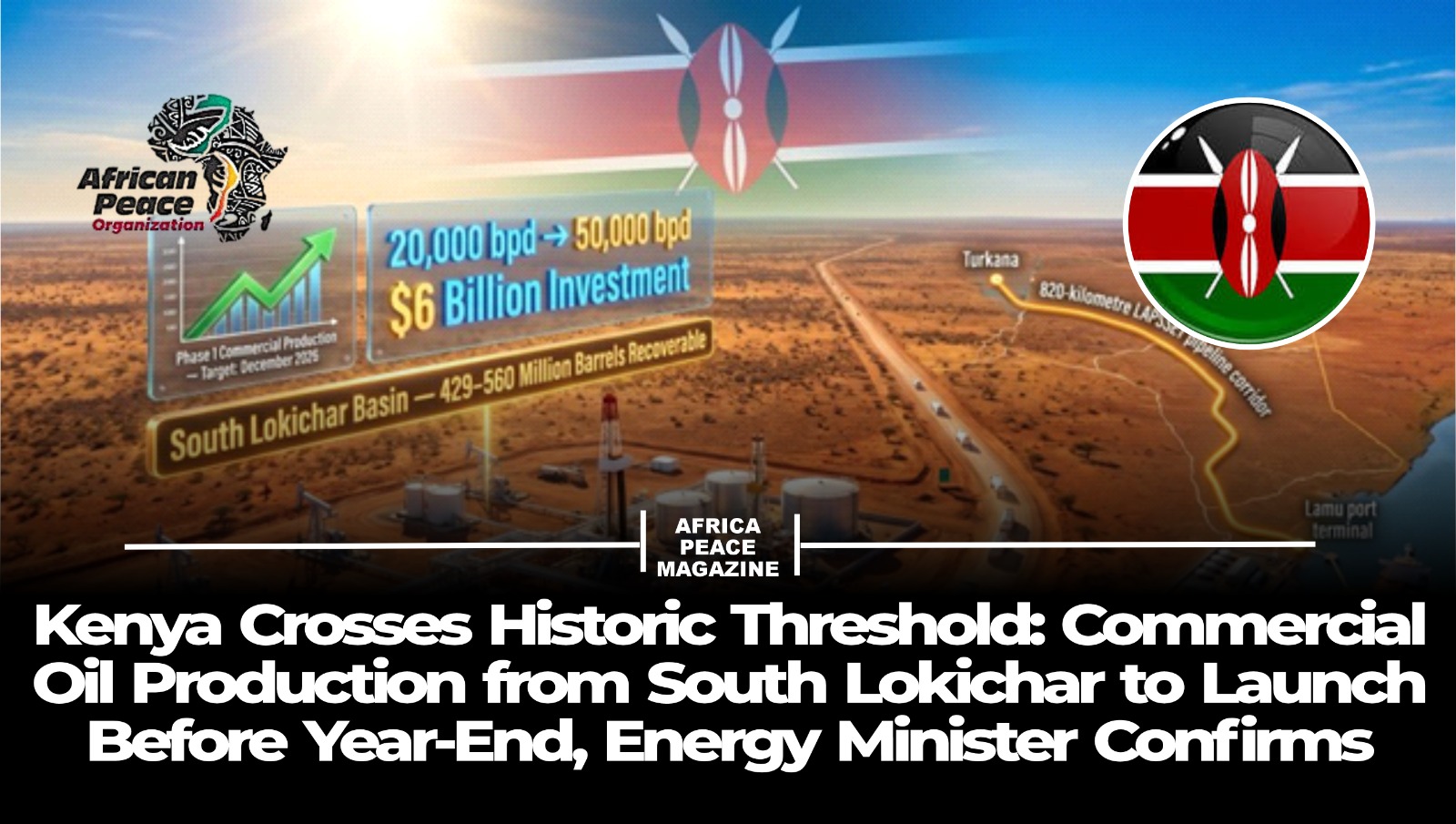
Kenya is on the verge of a historic milestone. The country is set to officially join Africa’s community of oil-producing nations before the end of 2026, with commercial oil production from the South Lokichar fields in Turkana County expected to commence at approximately 20,000 barrels per day, Energy Cabinet Secretary Opiyo Wandayi confirmed to lawmakers.
“For the first time, Kenya is going to commercially produce oil,” Wandayi declared, describing the development as a transformational moment that transitions the country from pilot crude exports to a fully operational upstream petroleum producer. Output is expected to scale progressively to approximately 50,000 barrels per day as field operations expand.
The announcement marks the culmination of years of exploration, appraisal, and infrastructure development in the Turkana Basin. The South Lokichar fields represent Kenya’s most significant hydrocarbon asset and are expected to meaningfully strengthen the country’s export revenues, energy security, and long-term fiscal position.
Refinery Plans Hinge on Production Growth
While the production milestone is historic, Wandayi acknowledged that Kenya’s downstream ambitions face near-term constraints. Previous assessments of the mothballed Mombasa refinery concluded that a restart or expansion would not be economically viable at current production volumes, with industry experts estimating that a sustainable refinery requires between 100,000 and 500,000 barrels per day of crude supply. The government is prioritising exports while keeping future downstream options open as regional output grows.
Kenya’s entry into commercial oil production comes amid renewed regional discussions involving Kenya, Tanzania, and Uganda over the possibility of developing a shared refinery to process East African crude at a viable scale — a concept that could reshape the region’s downstream economics. No formal agreement has yet been reached, but policymakers see regional integration as a credible path to improved refining economics and reduced dependence on imported petroleum products.
The Lokichar development also arrives at a moment of heightened global interest in alternative African oil supply sources, positioning Kenya to benefit from elevated crude demand and investor attention directed toward the continent’s emerging producers.
Source: angolanminingoilandgas.com