

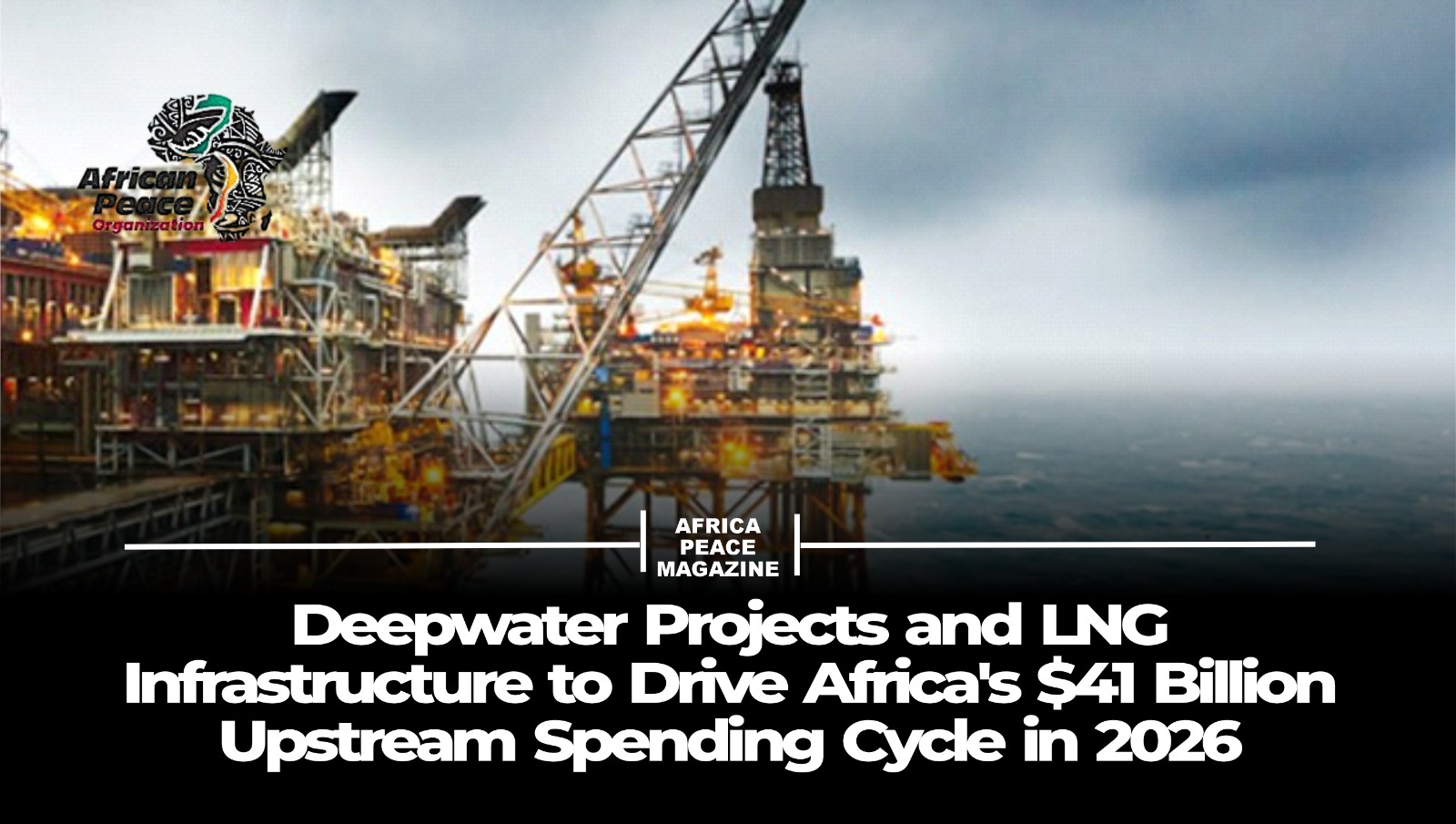
Africa’s upstream energy sector is heading into a period of stabilisation, with production forecast to reach 11.4 million barrels of oil equivalent per day in 2026 and capital expenditure projected to total approximately $41 billion, according to analysts at S&P Global. Offshore deepwater projects are expected to remain the dominant driver of long-term supply growth, as mature onshore basins face increasing reinvestment demands and natural production decline.
Research from S&P Global indicates that the continent remains structurally underexplored, with only around 25,000 wells drilled across the continent’s landmass and offshore areas combined. Significantly, 74% of all new hydrocarbon discoveries since 2010 have originated from deepwater and ultra-deepwater plays, while natural gas has accounted for roughly 73% of total hydrocarbon finds — underscoring the continent’s emerging role as a global gas and LNG hub.
Natural gas is increasingly becoming the central investment theme across African energy markets, supported by the growth of liquefied natural gas (LNG) infrastructure, floating production technologies, and expanding domestic gas-to-power demand. However, analysts cautioned that resource availability is no longer Africa’s binding constraint: the critical challenge is establishing integrated value chains backed by sufficient financing, regulatory certainty, and infrastructure coordination.
Energy Access Remains a Defining Challenge
Structural energy access gaps continue to loom large over the continent’s development trajectory. Approximately 600 million people across Africa still lack access to electricity, while more than 900 million lack access to clean cooking fuels. Electricity demand is expected to grow at nearly 4% annually through 2030, powered by rapid population growth, urbanisation, and expanding industrial activity. Analysts noted that natural gas will remain system-critical for stabilising power grids and enabling the integration of renewable energy across fragmented national power systems.
Africa’s growing strategic importance extends beyond oil and gas to the critical minerals sector, with countries across the continent holding significant reserves of cobalt, lithium, and platinum group metals essential to batteries and electrification technologies. Long-term value creation in this space, analysts noted, will hinge on governance stability, infrastructure readiness, and the development of local industrial processing capacity.
Source: worldoil.com