

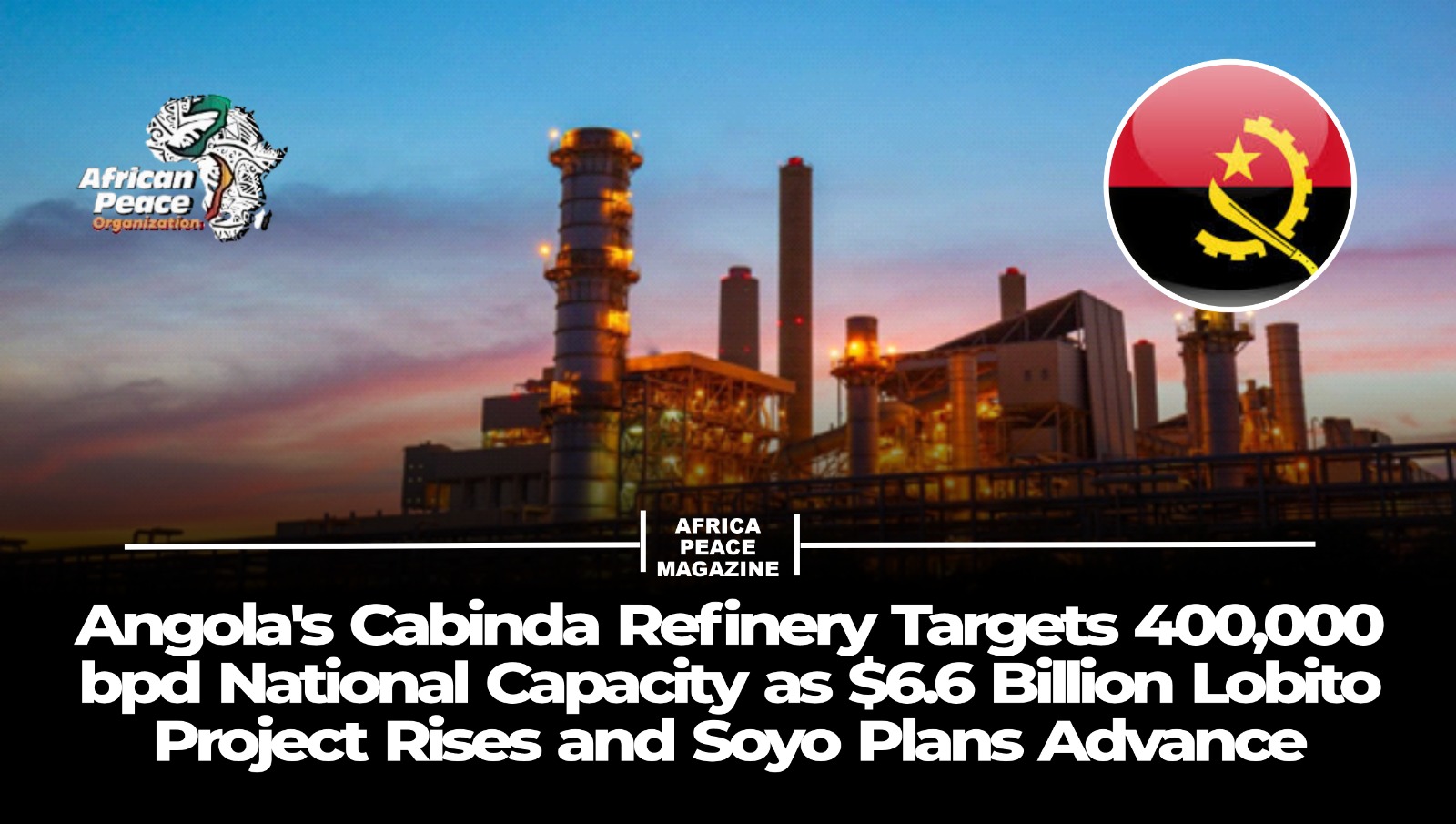
Angola’s downstream sector is undergoing its most ambitious expansion in half a century, with the 30,000 barrel-per-day Cabinda refinery now in full commercial operation and three additional major refining projects in various stages of development — pushing the country toward a stated target of exceeding 400,000 barrels per day of domestic refining capacity by 2027.
The Cabinda refinery, a public-private partnership between Gemcorp Capital (90% stake) and state oil company Sonangol, was built at a cost exceeding $470 million and marks Angola’s first new refinery since independence nearly 50 years ago. Its initial output — diesel for domestic consumption, alongside heavy fuel oil and naphtha for export — currently meets approximately 10% of Angola’s fuel demand, reducing what has historically been a more than $1.5 billion annual import bill for refined petroleum products.
A planned second phase at Cabinda will double capacity to 60,000 bpd, incorporating a hydrocracking unit to produce higher-value fuels including diesel and jet fuel. Engineering work is underway, with operations targeted for the first half of 2027.
The Wider Refining Pipeline
The existing Luanda refinery, operated by Sonangol with a capacity of approximately 65,000 bpd, has undergone a recent upgrade that raised daily fuel production to 1.58 million litres and cut import dependency by an estimated 15%. The flagship $6.6 billion Lobito refinery project — planned at 200,000 bpd — is under construction and has attracted regional investment, including equity participation from Zambia and an offer extended to Botswana. The proposed 100,000 bpd Soyo refinery is currently being reassessed following delays tied to its original developer, with authorities exploring alternative financing and partnership structures.
Together, these developments reflect a continental shift toward local refining, as African nations seek to retain more downstream value from their crude resources and reduce the structural cost of fuel imports.
Source: prospect-intel.com