

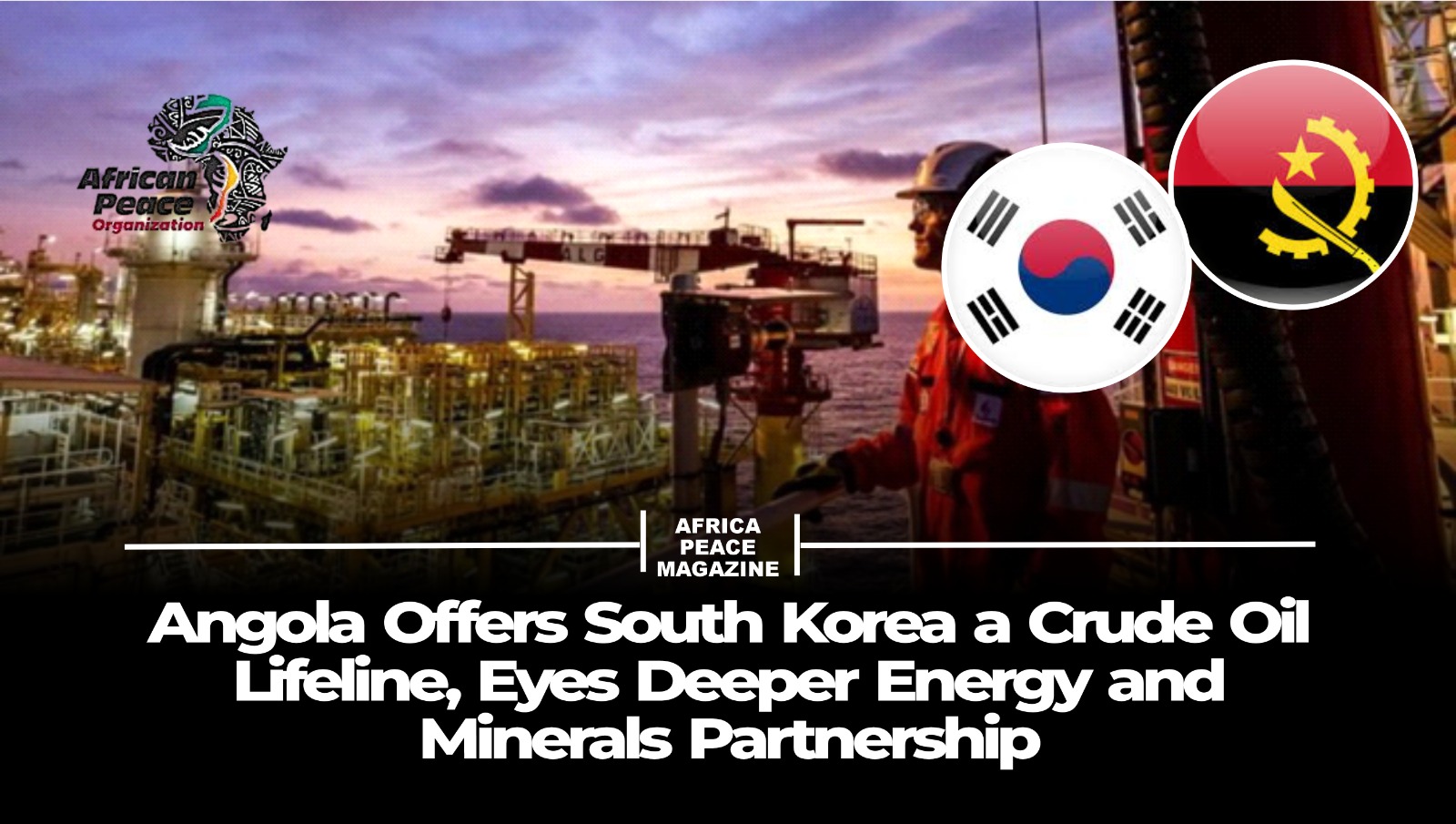
Angola has signalled its readiness to redirect crude oil supplies specifically to South Korea, offering Pyongyang’s refineries a reliable alternative supply amid global energy market pressures. Angolan Ambassador to South Korea, Sianga Kivuila Samuel Abilio, made the remarks in an interview with Yonhap News Agency in Seoul.
“Instead of selling them to different companies, we can direct sales specifically to Korea to satisfy your needs,” the ambassador said, noting that Angola could play a complementary supplier role given limitations related to committed production, export capacity, and logistics. He added that the spot market could help in the short term, with South Korean refineries turning to Angolan spot cargoes to meet immediate needs, and cooperation potentially developing into a long-term arrangement as Angola continues exploration activities.
Angola and Seoul’s foreign ministry have discussed the issue, with the South Korean government expected to facilitate connections between Korean firms and Sonangol, Angola’s state-owned oil company. While Angola is sub-Saharan Africa’s second-largest oil producer after Nigeria, a significant portion of its crude production is tied to long-term supply commitments linked to loan repayments to China.
Beyond oil, the ambassador highlighted significant opportunities in critical minerals. Angola is known for its reserves of lithium and rare earth elements crucial for high-tech industries, and the government is investing heavily in the sector to diversify its economy beyond oil and diamonds. “Mining activity is still in its growth phase, and the country aims to become an important player in the global market for minerals linked to the energy transition,” Abilio said.
The ambassador also called for active South Korean participation in the Lobito Corridor project, a major railway and logistics network linking Angola’s Atlantic port of Lobito with mineral-rich regions in the Democratic Republic of the Congo and Zambia. “The corridor is fundamentally about copper and cobalt, which are essential for EV batteries, electronics and renewable energy systems. Korean companies, especially battery supply chain players, could secure long-term mineral offtake agreements and refining partnerships,” he said.
South Korea and Angola established diplomatic relations in 1992, and the two countries have since strengthened cooperation as mutually complementary partners, particularly in resources and technology. The ambassador noted that Angola views South Korean technology, work discipline, and training systems as critical assets for African development.
Source: koreatimes.co.kr