

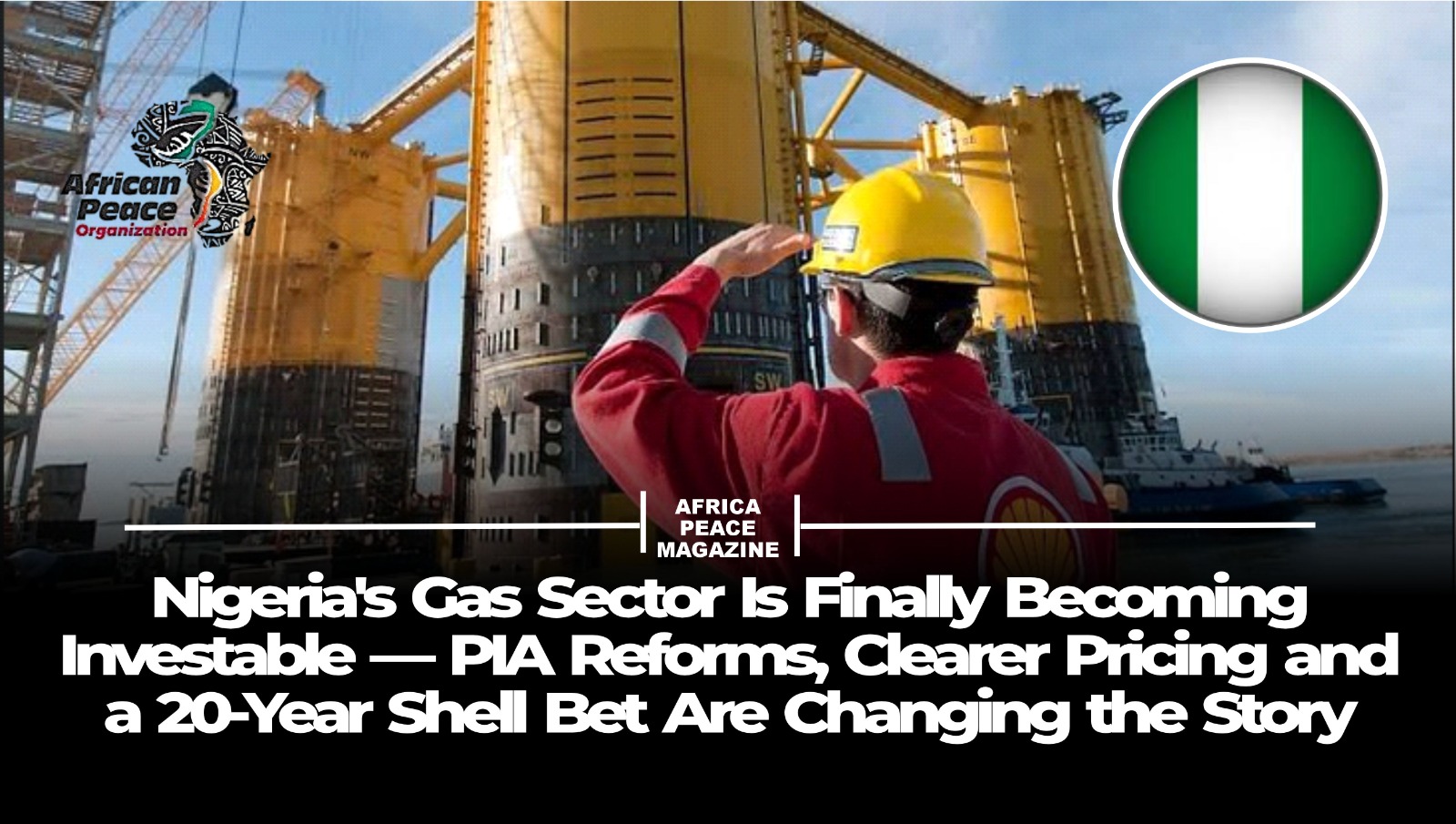
Nigeria’s domestic gas industry is undergoing a structural transformation that industry players say is making the sector genuinely bankable for the first time in its modern history — a shift they attribute directly to the policy reforms embedded in the Petroleum Industry Act, clearer pricing frameworks, and a more transparent licensing regime that has begun to restore investor confidence after years of policy ambiguity.
Shell Nigeria Gas Managing Director Ralph Gbobo made the case for the reform-driven turnaround in direct terms, arguing that the PIA had marked a decisive turning point by reinforcing the role of gas in Nigeria’s energy and industrial strategy and embedding two specific instruments that the sector had long lacked: the Network Code, which governs the operations of the domestic gas market and ensures transparency and stability, and the Domestic Gas Supply Obligation, which compels gas producers to allocate a defined proportion of output to the domestic market rather than routing it entirely to export.
‘The introduction of gas-focused policies, notably the Petroleum Industry Act, marked a turning point. By reinforcing the role of gas in Nigeria’s energy and industrial strategy and embedding instruments such as the Network Code — a critical framework that governs the operations of the domestic gas market and ensures transparency and stability — and the Domestic Gas Supply Obligation, the PIA significantly reduced policy ambiguity around gas development,’ Gbobo said.
The pricing dimension is equally significant. The introduction of clearer frameworks for gas supply and transportation pricing, alongside a more competitive and transparent licensing regime, has materially strengthened producer confidence — particularly for domestic gas projects, which have historically struggled to attract capital against the more lucrative economics of gas export contracts.
Gbobo grounded his argument in Shell Nigeria Gas’s own operating history — a twenty-year track record in domestic gas distribution that began in Agbara-Ota before demand economics or infrastructure were sufficiently developed to make the business case obvious. ‘When SNG started in Agbara-Ota over 20 years ago, demand was nowhere near what it is today. The economics were not perfect, but there was a leap of faith anchored on Nigeria’s industrialisation trajectory. That decision has proven right,’ he said.
What that leap of faith produced, over time, was a demonstration of how gas distribution can catalyse industrial cluster formation. Shell Nigeria Gas, incorporated in 1998 as a fully Shell-owned gas distribution company, currently serves more than 150 customers across Abia, Bayelsa, Ogun and Rivers states, and connected two additional companies in Ogun State to its distribution network in the first half of 2026. The company’s experience illustrates a broader principle that Nigerian gas sector advocates have long argued: when demand ambition, supply certainty, enabling infrastructure and commercial clarity converge — even imperfectly at the outset — they create industrial clusters capable of attracting long-term capital and deepening over time.
Nigeria holds some of the largest proven natural gas reserves in Africa and the world, yet domestic gas utilisation has chronically underperformed that resource endowment. The PIA’s structural interventions, now beginning to show up in investor sentiment and distribution activity, represent the most serious attempt yet to convert Nigeria’s gas abundance into reliable domestic supply — a precondition for the power generation stability and industrial development that the country’s economic ambitions require.
Source: orientalnewsng.com