

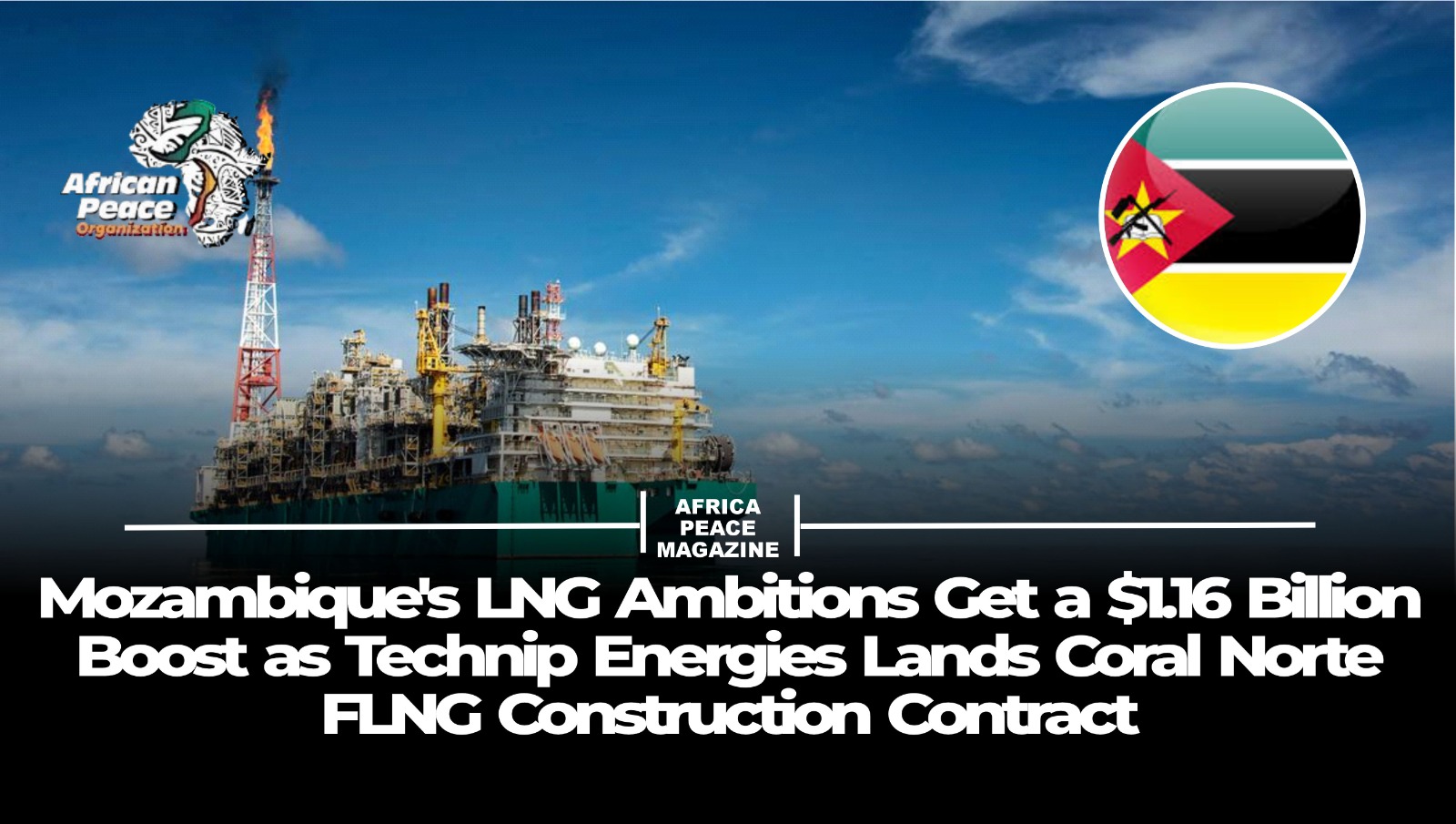
Mozambique’s deepwater LNG sector has taken a major leap forward with the award of a billion-dollar engineering, procurement, construction, installation and commissioning (EPCIC) contract for the Coral Norte floating LNG (FLNG) project — a development that will double the Coral hub’s production capacity and strengthen Mozambique’s standing among Africa’s leading gas exporters.
Technip Energies, in consortium with JGC and Samsung Heavy Industries, secured the contract from Mozambique Rovuma Venture (MRV). The award corresponds to more than $1.16 billion — or approximately €1 billion — of revenue for Technip Energies, making it one of the company’s most significant recent contract wins.
Coral Norte is being developed by Eni and its partners CNPC, ENH, XRG and KOGAS within Mozambique’s prolific Area 4 offshore gas block. Designed to produce approximately 3.6 million tonnes per annum (mtpa) of LNG, Coral Norte will effectively double the capacity of the Coral hub — bringing the total to 7 mtpa when combined with the already operational Coral South FLNG.
Technip Energies described Coral Norte as an enhanced replica of Coral South, capitalising on feed gas composition similarities and deepwater operating conditions while incorporating technical and operational lessons learned during the earlier development. The company called this its ‘design one, build many’ approach — a standardised project delivery model intended to sharpen execution certainty, optimise performance, and reduce delivery risk across large-scale offshore projects.
Arnaud Pieton, Chief Executive Officer of Technip Energies, framed the award in terms of energy security as much as commercial ambition: ‘This approach enables faster deployment of new LNG capacity, contributing to energy security and diversification. It also reinforces Mozambique’s growing role in the global LNG landscape.’
For Mozambique, the Coral North milestone represents continued progress in monetising one of Africa’s most significant deepwater gas resources — a critical priority for a country that has long needed stable energy export revenues to underpin its broader development agenda.
Source: oedigital.com