

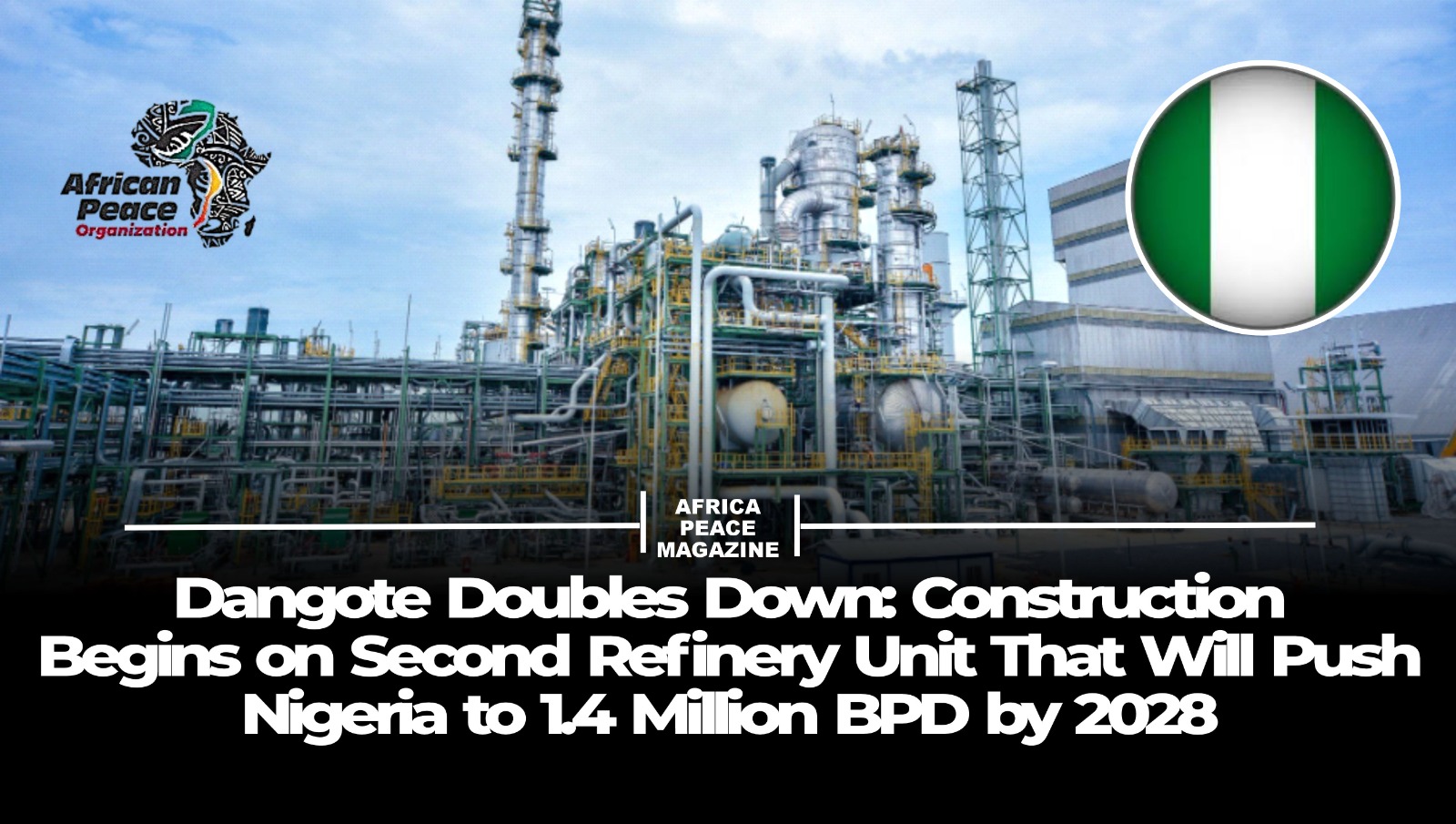
Ground has been broken on a second crude processing unit at Nigeria’s Dangote Petroleum Refinery — an expansion that will add 700,000 barrels per day (bpd) of capacity and elevate the Lagos facility’s total output potential to approximately 1.4 million bpd by 2028, cementing its status as a global refining giant.
The move comes as the refinery’s original 650,000-bpd train, first commissioned in 2024, has steadily reshaped Nigeria’s refined fuel balance. A country that historically spent billions importing petrol to meet domestic demand has been transformed: the Dangote facility now supplies between 60 and 90 percent of Nigeria’s petrol requirements, with imports declining sharply since 2025.
The second expansion is expected to complete that transition — moving Nigeria toward sustained self-sufficiency in refined products while unlocking export capacity that could redefine West Africa’s regional fuel supply chain. For a continent where fuel importation has long been both a fiscal drain and a vulnerability, the implications stretch far beyond Lagos.
The timing carries strategic weight. Global refining capacity growth has remained uneven, concentrated largely in Asia, while older European facilities continue to close. This structural tightening has periodically squeezed middle distillate markets and left import-dependent economies exposed during periods of disruption. Nigeria’s expanding refining base positions West Africa to absorb some of that regional demand internally — and to develop an intra-African fuel trade that remains largely underdeveloped.
The Dangote Refinery is already ranked among the world’s largest single-train refining complexes. With the second unit completed, its combined footprint would place it in an elite tier of global refinery infrastructure — remarkable for a facility less than four years old.
Source: prospect-intel.com