

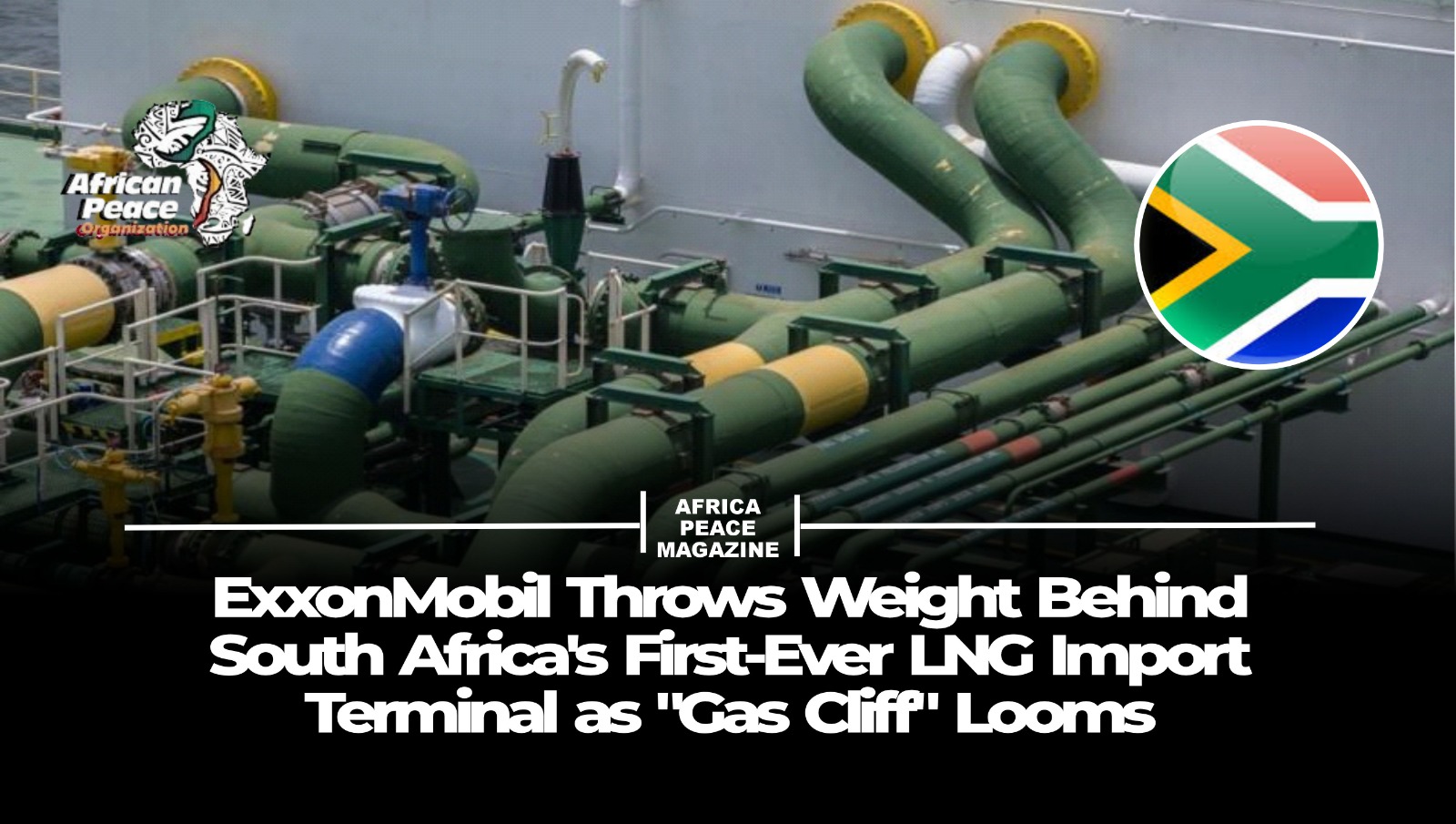
Zululand Energy Terminal (ZET) has signed a Heads of Agreement with ExxonMobil South Africa LNG Ltd., advancing plans for South Africa’s first liquefied natural gas import terminal at the Port of Richards Bay — a milestone that signals serious international backing for the country’s gas infrastructure ambitions.
The agreement signals ExxonMobil’s interest in supplying LNG to the proposed facility and arrives as South Africa braces for a significant gas supply shortfall by 2030, driven by declining production from Mozambique’s Pande-Temane gas fields. Industry stakeholders have warned that the resulting “gas cliff” could affect power generation, industrial operations, and broader economic growth unless alternative gas supplies are secured in time.
The Zululand Energy Terminal is being developed as a joint venture between Vopak Terminal Durban and Transnet Pipelines, and is expected to provide LNG import, storage, regasification, and distribution services to power generation and industrial customers across the region.
“This agreement represents more than a commercial milestone; it is a strong vote of confidence in the Zululand Energy Terminal and the future of LNG in South Africa,” said Oliver Naidu, director of ZET. “The participation of a global energy leader such as ExxonMobil reinforces the strategic importance of Richards Bay as an entry point for LNG.”
Andrew Barry, chairman of ExxonMobil LNG Market Development Inc., said the agreement reflects the company’s global LNG experience and its commitment to supporting South Africa’s energy security with reliable supply, adding that the company sees a strong opportunity to help meet growing demand for secure energy.
Project developers say the terminal is expected to strengthen energy security, support the development of a domestic gas market, improve industrial competitiveness, and provide a complementary energy source alongside renewable power generation — establishing an entirely new LNG import platform for South Africa as domestic and regional gas sources decline.
Source: worldoil.com