

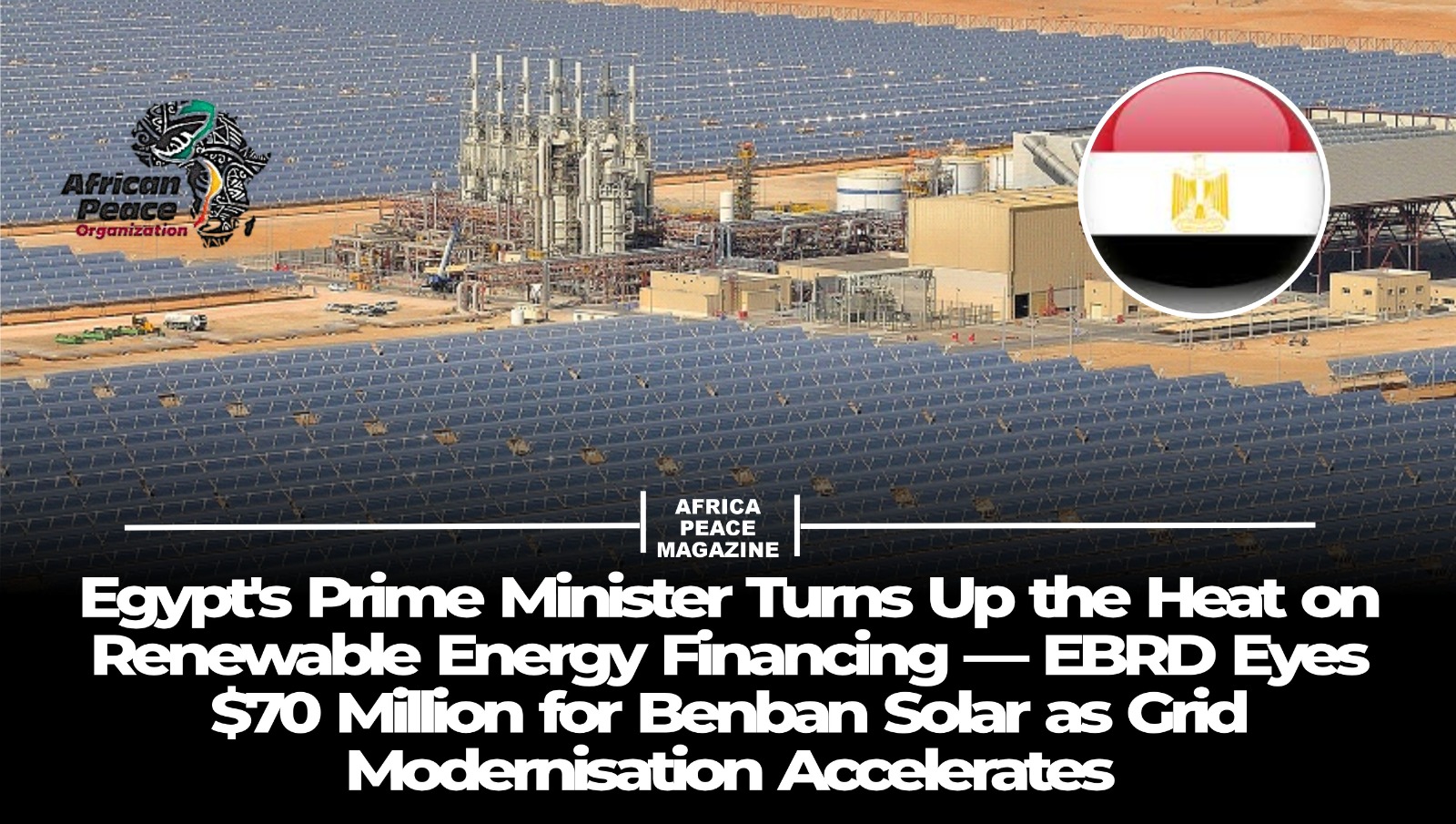
Egyptian Prime Minister Mostafa Madbouly has convened a dedicated follow-up meeting to push the pace on securing financing for the country’s renewable energy pipeline, making clear that mobilising capital for clean power projects is a direct government priority — not merely a ministerial aspiration.
The meeting, held to review funding mechanisms and align delivery timelines across the project portfolio, produced a set of explicit directives. Madbouly called for uninterrupted coordination between the Ministries of Electricity and Finance alongside all relevant government entities, with the goal of accelerating the integration of additional clean energy capacity into the national grid to meet rising power demand and ensure supply sustainability.
A significant emphasis was placed on grid infrastructure as the bottleneck that financing must address: the meeting reviewed requirements for upgrading the electricity transmission and distribution network, including sourcing the equipment needed for replacement and modernisation programmes designed to reduce energy losses and improve system efficiency — the two metrics that most directly affect the economics of renewable energy integration.
Egypt’s financing strategy is increasingly outward-facing. The European Bank for Reconstruction and Development (EBRD) is evaluating a $70 million financing package for the Nubia Benban solar project — a development that would build on a $65 million bridge loan the EBRD provided to the same project in April 2026. Nubia Benban lies adjacent to the Benban Solar Park in Upper Egypt, one of the world’s largest solar complexes, whose success has already attracted sustained international capital and established Egypt’s renewables credentials with global institutional investors.
The government’s emphasis on strict adherence to execution schedules carries operational weight in a sector where project delays have historically eroded investor confidence and disrupted grid planning. With Egypt simultaneously commissioning large-scale wind infrastructure in the Gulf of Suez, advancing solar development in Upper Egypt, and managing the privatisation of existing renewable assets like the Gabal El-Zeit wind facility, the task of aligning financing flows with construction timelines across a diversified project portfolio has become one of the most complex coordination challenges in the country’s energy administration.
Source: egyptoil-gas.com