

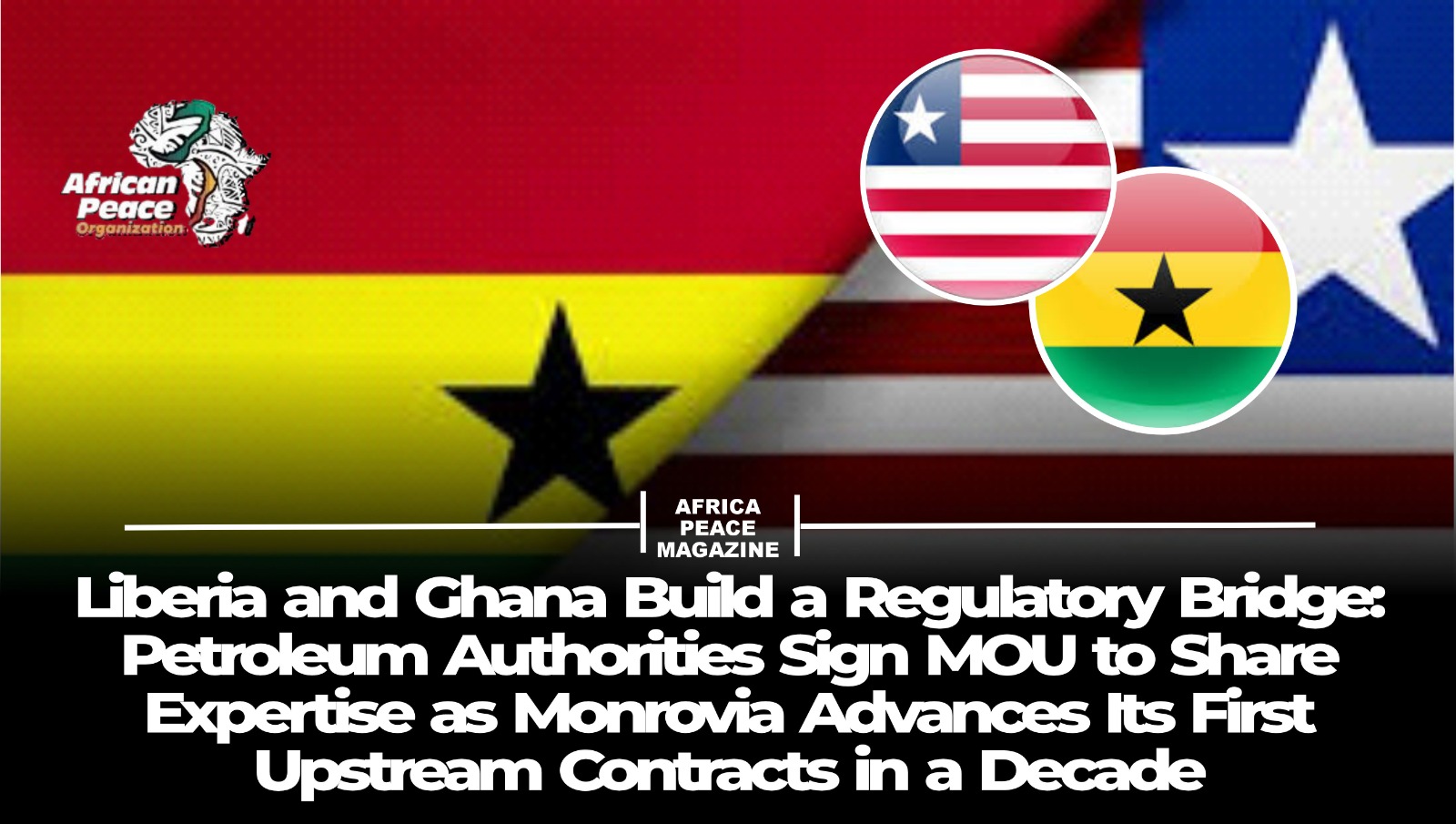
Liberia’s petroleum regulator has formalised a cooperation agreement with its Ghanaian counterpart in a south-south partnership that brings together two West African nations at very different stages of upstream development — with Ghana offering hard-won institutional knowledge and Liberia urgently needing it as it administers its first production sharing contracts in more than a decade.
The Liberia Petroleum Regulatory Authority (LPRA) and the Ghana Petroleum Commission (GPC) signed their Memorandum of Understanding on June 2, 2026, establishing a bilateral framework for regulatory collaboration, knowledge exchange and joint capacity building across the full range of upstream governance functions: petroleum licensing, contract administration, local content development, investor engagement, and the training of petroleum sector professionals.
The timing for Liberia is pointed. The LPRA is currently administering the country’s first upstream Production Sharing Contracts signed in a decade — agreements concluded in 2025 with TotalEnergies EP Liberia and Oranto Petroleum. Managing those contracts with institutional confidence requires precisely the kind of technical depth and regulatory track record that Ghana has developed over fifteen years of offshore petroleum production from its Jubilee, TEN and Sankofa fields.
Marlin T. Logan, Director General of the LPRA, captured the relationship in terms of mutual respect rather than simple technology transfer: ‘The relationship between Liberia and Ghana in the energy sector has always been one of inspiration and mutual support. We are meeting today as friendly nations shaped by one another’s good examples in natural resource management.’
Emeafa Hardcastle, Acting Chief Executive Officer of the Petroleum Commission of Ghana, emphasised the institutional dimension of petroleum governance: ‘As regulators, we are entrusted to ensure petroleum resources deliver lasting benefits to our citizens, and achieving this requires strong institutions, capable human resources, robust regulatory frameworks, and continuous learning from one another.’
Both institutions have committed to moving beyond the MOU text to operationalise the partnership through clearly defined technical exchanges and joint initiatives designed to deliver measurable results. The agreement is framed not as a conclusion but as the opening chapter of a bilateral regulatory partnership — one that both sides say will be driven by practical outcomes rather than diplomatic formality.
Source: allafrica.com