

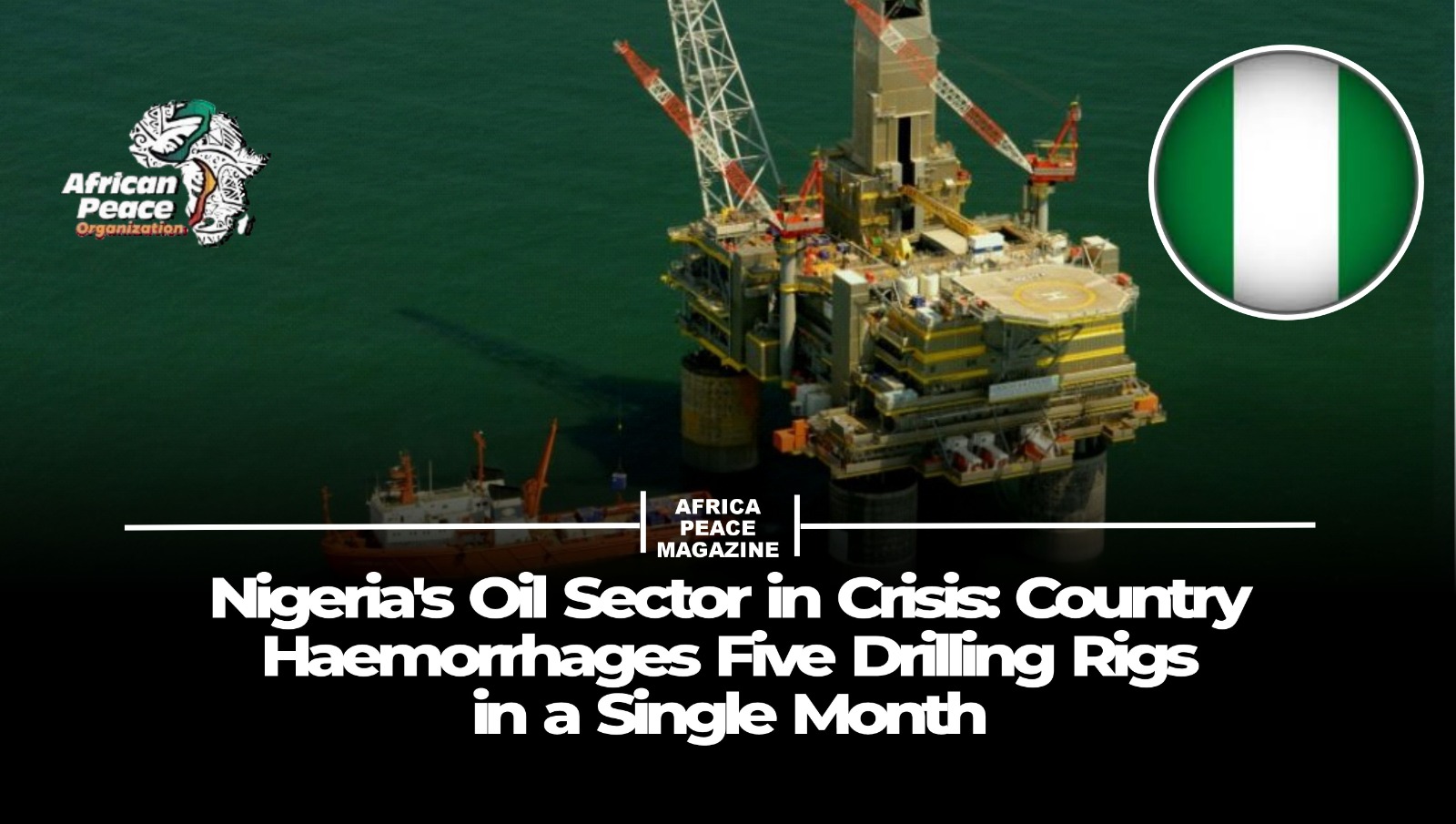
Nigeria’s upstream oil sector is reeling from its sharpest monthly drilling contraction in recent memory, with the country shedding five active rigs in a single month and raising urgent alarms over future crude output and government revenue. A new report by the African Energy Council (AEC) reveals that Nigeria’s active rig count plummeted from 17 in March to just 12 in April 2026 — a decline of nearly 30 percent within 30 days. The collapse compounds an already troubling downward trend: the rig count had already slipped from 15 in 2024 to 13 in 2025, meaning a substantial volume of potential crude production was never drilled.
The timing could not be worse. The Federal Government’s 2026 budget anchors on a production benchmark of 1.84 million barrels per day (bpd), yet actual output stood at only 1.48 million bpd in April 2026 — a shortfall that directly eats into oil revenues, which account for roughly 60 percent of government earnings.
The AEC pulled no punches in its assessment: ‘A 41.7 percent single-month rig count collapse, compounding revenue losses exceeding $3.1 billion, and a widening gap between NNPC’s 2030 ambitions and ground-level drilling activity signal a sector in structural distress rather than a cyclical downturn.’
The Council noted a significant discrepancy in the numbers — the Nigerian Upstream Petroleum Regulatory Commission (NUPRC) reported 31 active rigs in the same period, while OPEC placed the figure at 12, a gap it attributed to differing methodologies over whether standby rigs are counted as active. Both figures, the AEC stressed, point unmistakably in the same direction.
Structural rot runs deep. Many Nigerian oil fields are between 40 and 50 years old and are experiencing natural production decline. Without sustained workover programmes and fresh investments, more assets risk becoming uneconomic and shutting down entirely. Chronic crude theft, pipeline vandalism, and lingering insecurity in the Niger Delta continue to drive operators out of high-risk locations, while the exit of international oil companies from onshore assets has created a void that indigenous operators have yet to fully fill. Regulatory friction is making things worse. Slow implementation of the Petroleum Industry Act (PIA), licensing delays, and contract approval bottlenecks are discouraging new drilling commitments.
To pull the sector back from the brink, the AEC urged the government to fast-track PIA fiscal incentives for deepwater exploration and gas monetisation, strengthen Niger Delta security through community engagement and modern pipeline surveillance, and accelerate approvals for indigenous operators absorbing divested IOC assets. It also called for channelling gas flare revenues into upstream field rehabilitation and harmonising Nigeria’s rig-count reporting with OPEC to improve policy planning.
‘While Africa drills forward, Nigeria drills back,’ the Council warned. ‘Without urgent policy action, Nigeria risks permanently ceding both its relevance within OPEC and its opportunity to monetise reserves before the global energy transition narrows that window.’
Source: thesun.ng | African Energy Council (AEC) Report