

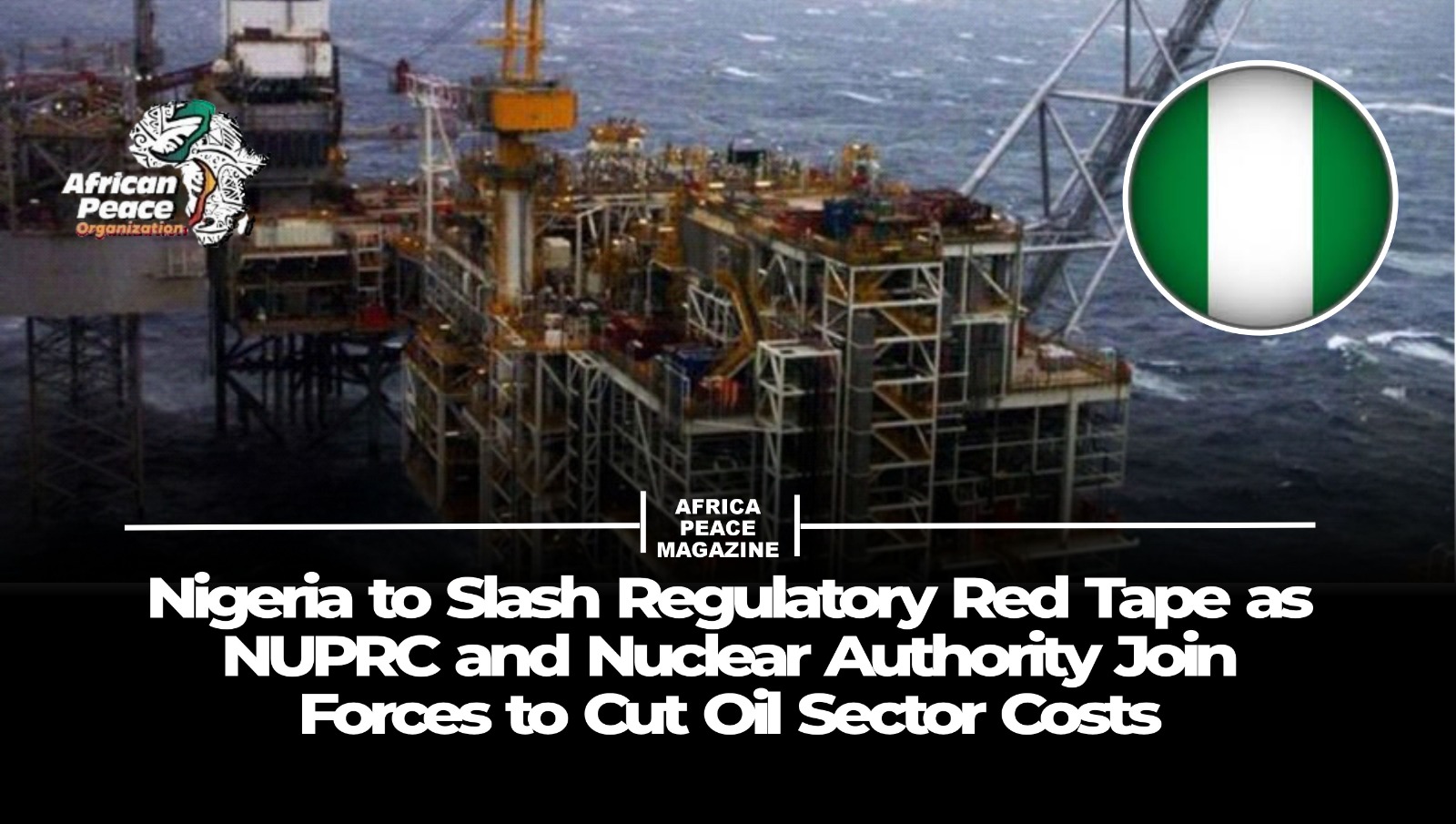
Nigeria’s upstream petroleum regulator is teaming up with the country’s nuclear regulatory body in an effort to streamline overlapping requirements, reduce operating costs for oil companies, and sharpen the industry’s investment appeal.
The Nigerian Upstream Petroleum Regulatory Commission (NUPRC) and the Nigerian Nuclear Regulatory Authority (NNRA) announced the collaboration following a high-level meeting between NUPRC Chief Executive Oritsemeyiwa Eyesan and NNRA Director-General Yau Idris at the commission’s Abuja headquarters.
The immediate impetus is practical: while the NUPRC governs the technical, commercial, and operational dimensions of oil and gas exploration and production, the NNRA regulates the possession, use, transportation and disposal of radioactive materials and radiation-emitting equipment. Both mandates intersect constantly in the oil and gas sector, where technologies such as well logging, industrial radiography and nucleonic gauging deploy radioactive sources routinely.
Eyesan made the cost case bluntly: ‘The only way we can safeguard investments is to reduce our cost of operations, and when you have a multiplicity of laws, the likelihood is that you will have higher costs because each law normally will come with its own fees and charges.’ She nominated senior NUPRC officials to work closely with the NNRA on bridging identified gaps.
Idris reinforced the upstream dimension of the challenge, noting that the oil and gas industry is one of Nigeria’s largest users of radioactive sources and radiation-emitting equipment. He said the partnership would allow both agencies to share data and simplify compliance procedures, describing the end goal as ‘a single-window approach, where both agencies share information rather than requiring operators to submit the same data twice.’
The agencies also agreed to incorporate radiological impact assessments into the NUPRC’s environmental guidelines for upstream operators and to collaborate on training, capacity building and radiation protection standards.
The move arrives as Nigeria posted a 283.3 percent year-on-year surge in oil and gas foreign capital inflows in Q1 2026 — though the sector attracted just $0.46 million in absolute terms, compared to the country’s overall capital importation of $10.37 billion — underscoring how much ground remains to be made up in attracting meaningful upstream investment.
Source: punchng.com