

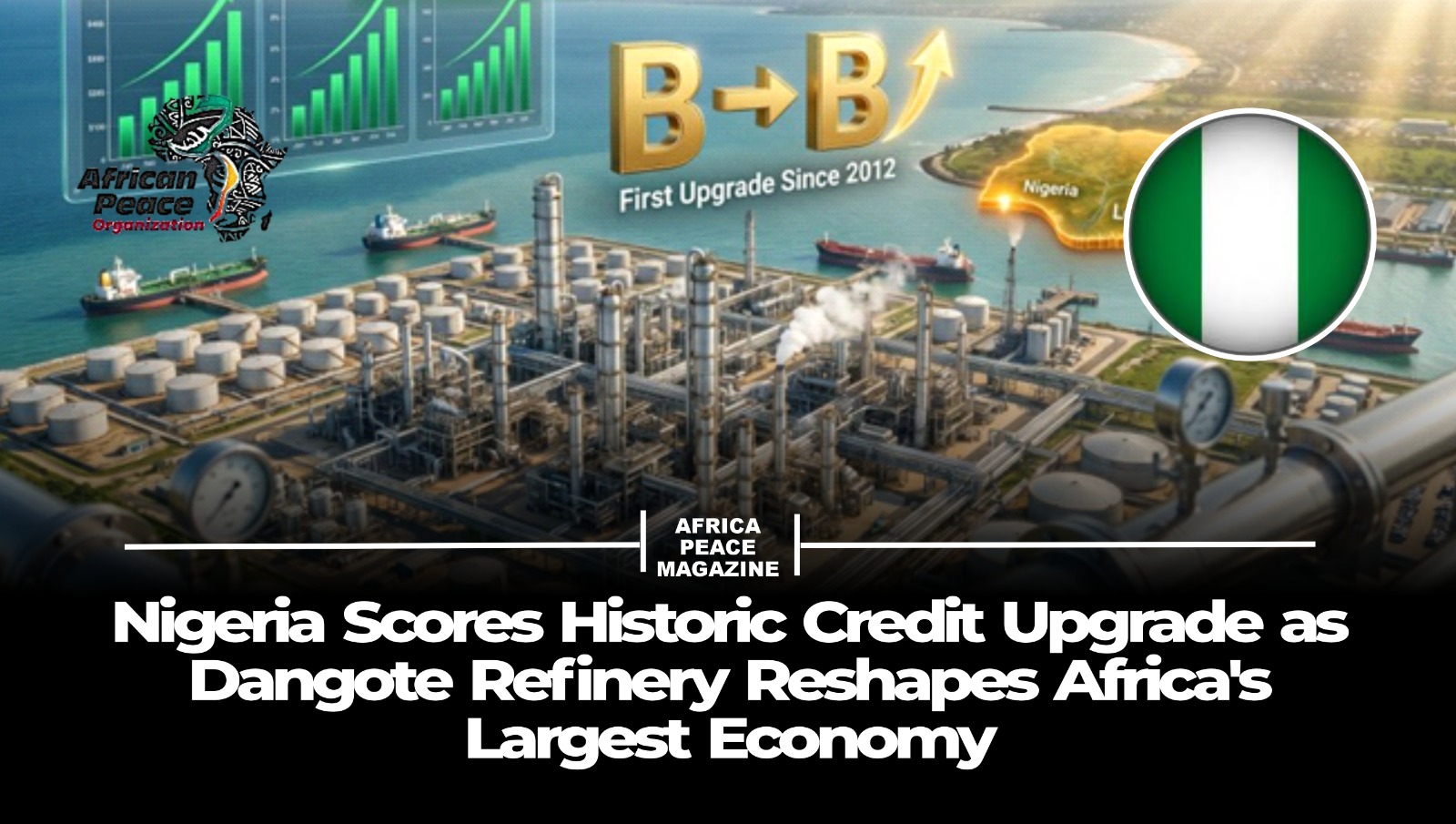
S&P Global Ratings has upgraded Nigeria’s long-term sovereign credit rating to B from B-, granting Africa’s most populous nation its first credit upgrade in 14 years and elevating Aliko Dangote’s $20 billion refinery to the rank of a country-shaping economic asset. The rating agency cited the Dangote Industries refining and petrochemical complex — now operating near its 650,000-barrel-a-day capacity — as one of four pillars underpinning its decision.
S&P has cited Dangote’s planned expansion to 1.4 million barrels a day as evidence the refinery has become structurally relevant to Nigeria’s external balance, not just its energy sector. The agency noted that the Dangote complex sourced roughly two-thirds of its crude from domestic fields in 2025, cutting Nigeria’s refined-product import bill while also beginning exports of petrol and diesel to West African and Atlantic markets.
Gross foreign-exchange reserves climbed to $50 billion by early March 2026, up from $33 billion in 2023, while the current-account surplus is projected at 5.8 per cent of GDP this year. The upgrade marks the first time a global rating agency has elevated a private African industrial asset to the status of a macroeconomic stabiliser.
The good news, however, stops at the pump. S&P warned that the refinery is unlikely to ease retail fuel prices because Nigerian pump prices now track global benchmarks and the plant still imports blending crudes as part of its feedstock. Meanwhile, the World Bank’s April 2026 Nigeria Development Update found that the share of Nigerians living below the national poverty line rose to 63 per cent in 2025 — roughly 140 million people — even as headline inflation fell to 15.15 per cent.
Other rating agencies have moved in the same direction: Fitch Ratings raised Nigeria to B in April 2025, and Moody’s Investors Service lifted it to B3 from Caa1 in May 2025. The IMF, however, has been more cautious, cutting its 2026 growth forecast for Nigeria to 4.1 per cent from 4.4 per cent. The general government deficit is projected to widen to 4.2 per cent of GDP in 2026 as President Bola Tinubu’s administration accelerates capital spending ahead of the January 2027 election.
Source: orientalnewsng.com