

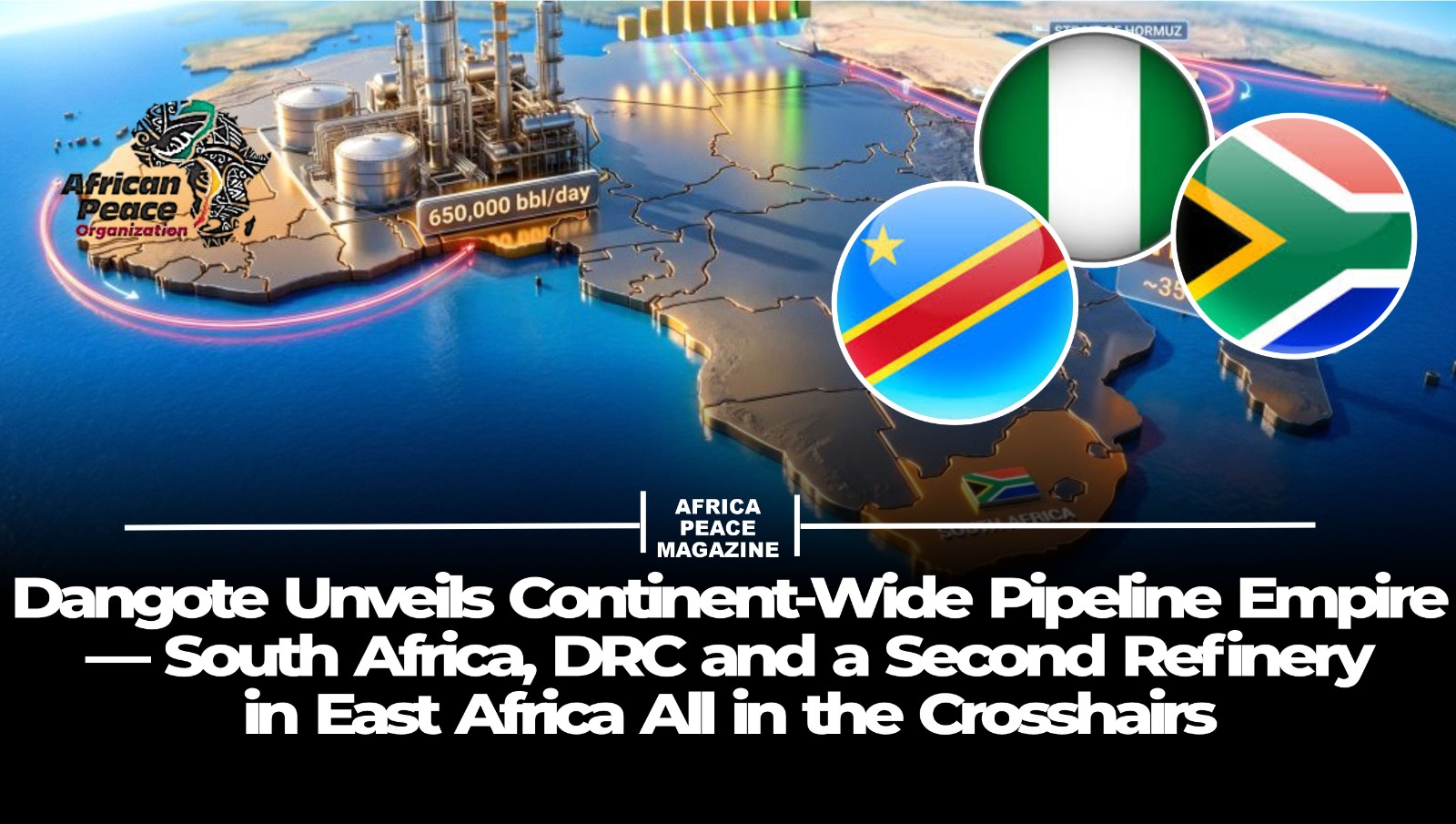
Dangote Group has laid out an audacious blueprint to reshape Africa’s fuel distribution landscape, announcing a network of pipeline infrastructure projects stretching from Namibia through Botswana, Zimbabwe and Zambia into South Africa and potentially as far north as the Democratic Republic of Congo — a continental energy integration plan of unprecedented scale.
Refinery Chief Executive David Bird disclosed the ambitious expansion plan in a media interview, describing the most developed opportunity as a southwestern corridor anchored by a 240-million-barrel tank farm at Namibia’s Walvis Bay port, from which a pipeline would run through Botswana into Zimbabwe and Zambia. “Probably the most developed is our Southwestern opportunity from the Namibia tank farm and then a pipeline through Botswana into Zimbabwe into Zambia — potentially down into South Africa and maybe as far up as into DRC,” Bird said, adding that the ambitions extend beyond the already announced 2,500-kilometre Walvis Bay link.
The Walvis Bay tank farm is currently finalising regulatory approvals. The group has also held discussions about developing storage capacity at the disused Sonara refinery in Cameroon, and signed a memorandum of understanding in Harare to build an oil products pipeline from its Walvis Bay depot into Botswana, Zimbabwe and Zambia.
To support smaller cargo shipments to countries such as Namibia, Dangote is developing a new four-berth marine jetty at the Nigerian refinery, capable of loading LR2 tankers and other smaller vessels. The infrastructure investment reflects the group’s strategy of owning the entire supply chain from refining through to final delivery — a model designed to cut landed fuel costs and stimulate demand across markets currently starved of affordable, reliable energy.
The strategic case is compelling. Limited infrastructure and storage across African markets force many countries to rely on road trucks for fuel distribution, inflating delivery costs and stretching transit times to four or five days in some corridors. In Zambia, Bird noted, a shortage of diesel-generated power has been a key barrier to mining copper and other natural resources. “We’ll be able to bring reliable, dependable, affordable clean fuels to support that power development in these parts of the world,” he said.
Dangote’s continental ambitions extend even further. Bird confirmed plans for a second refinery in East Africa, modelled on the Nigerian facility, which would eventually grow the group’s total refining capacity from a 1.4 million barrel per day Nigerian target to 2.1 million barrels per day across the continent. Other areas of interest include a corridor stretching south of Senegal to South Africa and a potential Djibouti oil link.
In Nigeria itself, the group has responded to security and sabotage risks by purchasing 4,000 compressed natural gas trucks to deliver fuel to rural areas — a fleet that will be mobilised once operational constraints are resolved. The company has so far relied on international traders to manage its export flows but is actively seeking direct offtake agreements with governments and businesses. According to Dangote figures, some 56 per cent of its 2025 fuel sales — totalling four million metric tons — went to West African markets, with the refinery recording its first export to China in mid-May and a record 30,000 barrels per day shipment to South Africa in March.
Analysts at S&P Global CERA project Nigerian oil demand growing from 450,000 barrels per day today to 740,000 barrels per day by 2035, overtaking South Africa as Africa’s largest consumer — a trajectory that only strengthens the case for the infrastructure investments Dangote is now racing to put in place.
Source: orientalnewsng.com