

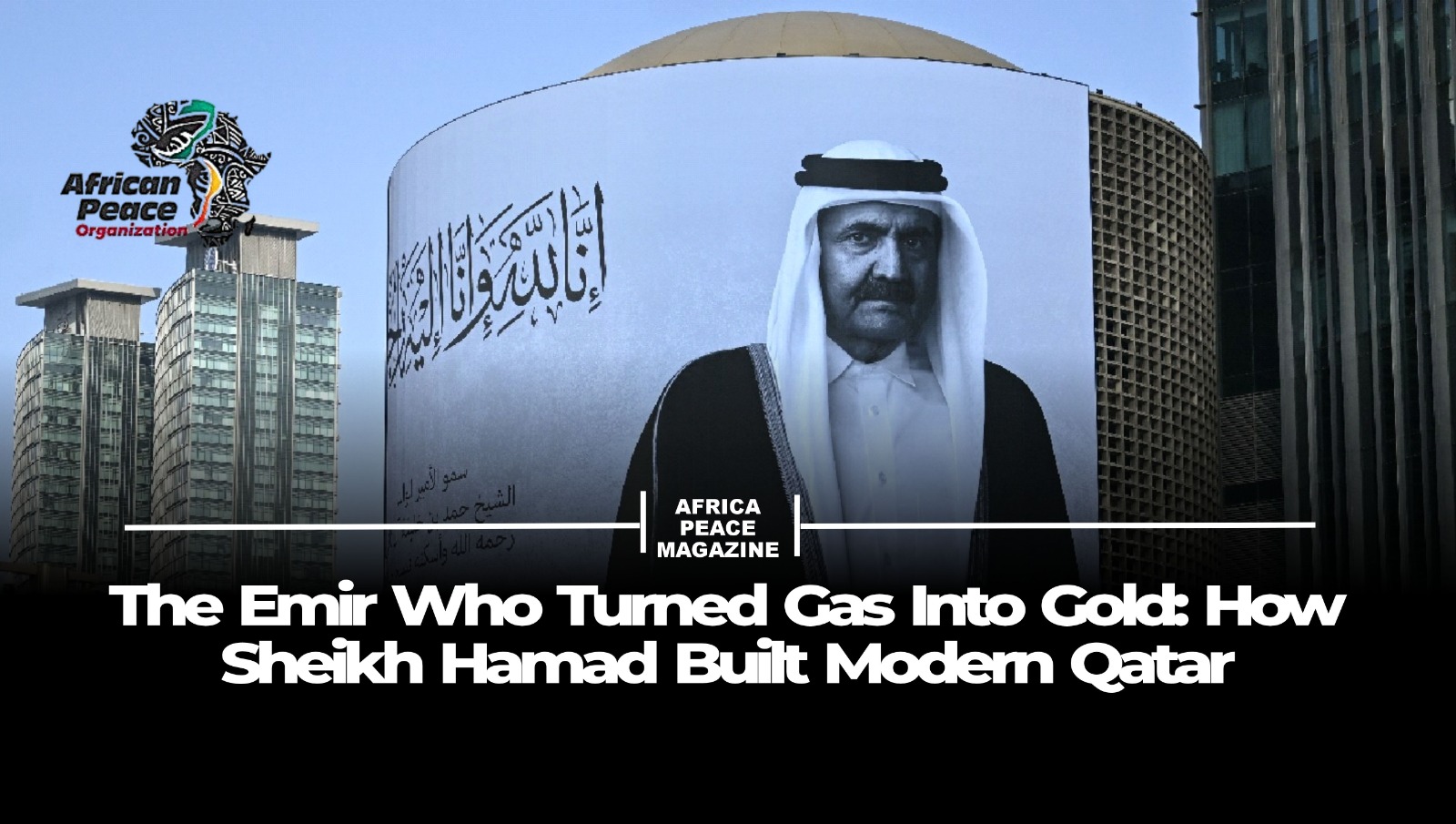
Qatar’s Father Emir, Sheikh Hamad bin Khalifa Al Thani, has died at the age of 74, leaving behind an economic transformation that turned a small, oil-dependent Gulf state into one of the wealthiest nations on earth.
When Sheikh Hamad assumed power in 1995, Qatar’s economy was modest and largely reliant on oil, with the vast gas reserves of the North Field only beginning to be developed. Within less than two decades, the country had become the world’s largest exporter of liquefied natural gas, home to one of the largest sovereign wealth funds globally and among the highest per-capita incomes anywhere.
The shift began even before he took power, when his 1989 appointment as chairman of the Supreme Council for Planning gave him early oversight of the country’s development strategy. Qatar shipped its first LNG cargo in 1996 and, within 15 years, had become the world’s top LNG exporter, with production capacity reaching 77 million tonnes annually by 2010. Qatari government data show the hydrocarbons sector’s contribution to the economy surged from around $3bn to roughly $110bn during Sheikh Hamad’s rule.
The gas boom translated into extraordinary economic growth. World Bank figures cited by Bloomberg show Qatar’s GDP grew more than twentyfold during his tenure, from about $8bn in 1995 to roughly $199bn by 2013, with real growth peaking at over 26% in 2011 as major LNG projects came online.
Rather than simply spending the windfall, Sheikh Hamad built institutions to manage it. The Supreme Council for Economic Affairs and Investment was established in 2001, followed in 2005 by the Qatar Investment Authority, which grew into a global investment powerhouse now managing more than $500bn in assets, with stakes in companies such as Barclays and Volkswagen and landmark properties including Harrods and London’s Shard skyscraper.
Living standards rose alongside the wealth, with per-capita GDP exceeding $90,000 in purchasing power terms and unemployment falling to very low levels. Sheikh Hamad also invested heavily in education and healthcare, founding the Qatar Foundation in 1995 and attracting branches of universities including Georgetown, Texas A&M and Carnegie Mellon, while expanding the country’s hospital network through Hamad Medical Corporation.
Massive infrastructure investment followed, including Hamad International Airport, Hamad Port, Lusail City and the groundwork for the Doha Metro — developments that ultimately helped Qatar become the first Arab nation to host the FIFA World Cup, in 2022, backed by more than $200bn in related infrastructure spending.
In 2008, Sheikh Hamad launched Qatar National Vision 2030, a long-term strategy to build a knowledge-based economy that continues to guide government policy today under his son and successor, Emir Sheikh Tamim bin Hamad Al Thani.
Source: aljazeera.com