

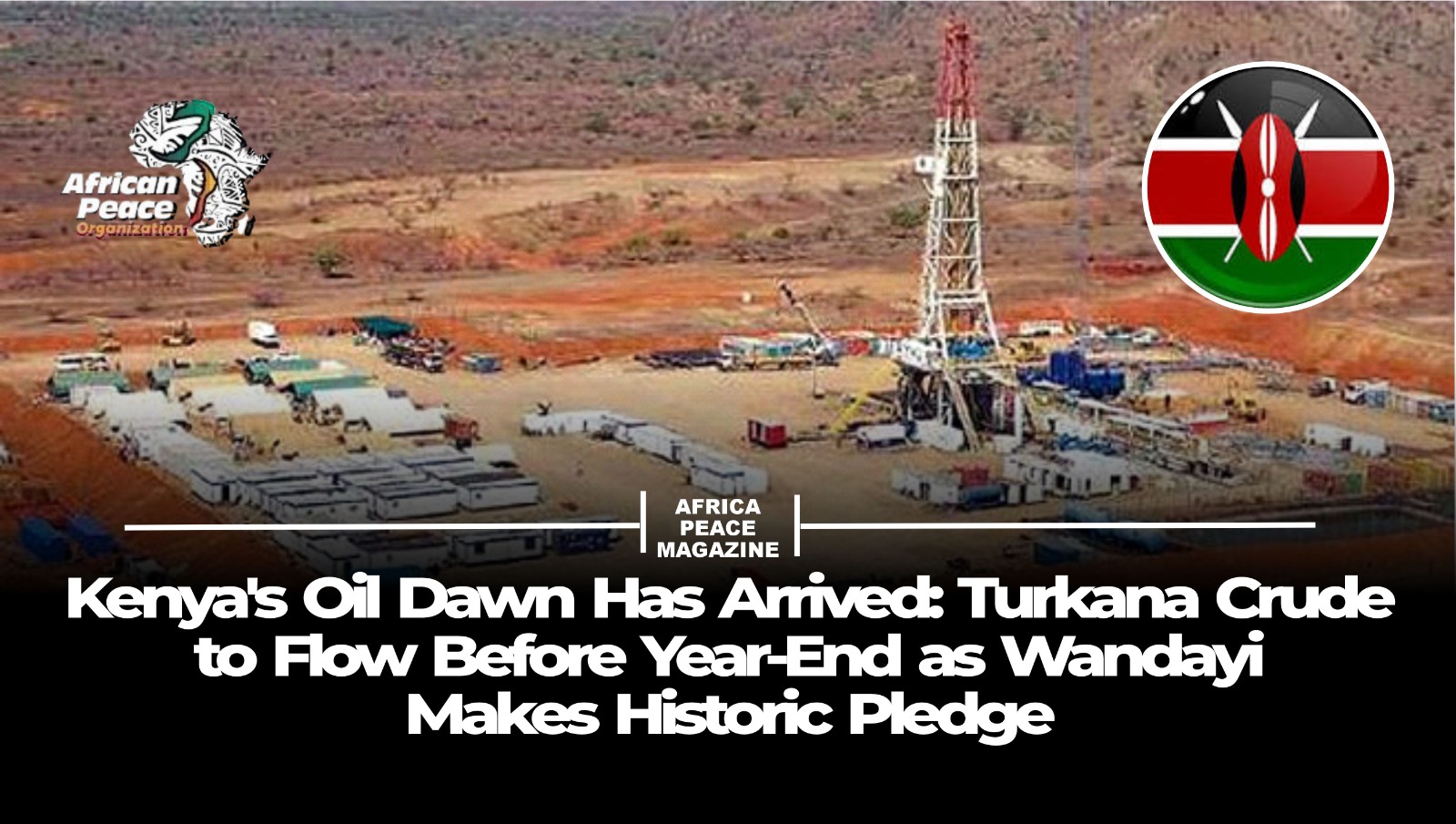
After more than a decade of delays, false starts and mounting national frustration, Kenya is finally on the verge of becoming an oil-producing nation. Energy Cabinet Secretary Opiyo Wandayi has made the most unambiguous government commitment yet, declaring that commercial oil production from the Turkana fields will commence before the end of 2026.
“Before the end of the year, we will start producing oil from Turkana,” Wandayi said during a radio interview, adding that the government is taking every necessary step to implement the plan within the stated timeline and that all indications point to the project becoming a reality before the close of the year.
The announcement marks a decisive turning point for one of sub-Saharan Africa’s most anticipated — and most delayed — upstream projects. Kenya discovered commercially viable oil reserves in Turkana over a decade ago, yet the journey from discovery to production has been stalled repeatedly by infrastructure gaps, community grievances, financing challenges and policy uncertainty. Wandayi’s declaration signals that those obstacles are now being overcome.
In a candid acknowledgement of the structural challenge that remains, the CS confirmed that Kenya currently has no refinery capable of processing the waxy, heavy crude from Turkana’s fields. The crude will therefore be exported to international markets for processing in the near term, generating foreign exchange earnings for the country. “Crude oil will be coming from Turkana heading abroad so that it provides funds for our benefit, not just for Turkana residents but also all Kenyans,” Wandayi said, while expressing confidence that a regional refinery would be established in the longer term. “We believe in the near future we will have a refinery in our region,” he added.
That refinery ambition is already taking shape at the highest political level. President William Ruto has separately confirmed that he held discussions with Nigerian industrialist Aliko Dangote on a proposed regional oil refinery project. Speaking at the National Prayer Breakfast, Ruto acknowledged resistance from some quarters but maintained that the plan would proceed, describing it as a strategic investment to strengthen regional energy security and reduce dependence on imported petroleum products.
If production begins as Wandayi has pledged, Kenya will join the ranks of oil-producing nations and open a transformative new chapter in its economic development — one that carries the potential to generate significant government revenues, create employment and drive infrastructure investment in one of the country’s most underdeveloped regions.
Source: the-star.co.ke