

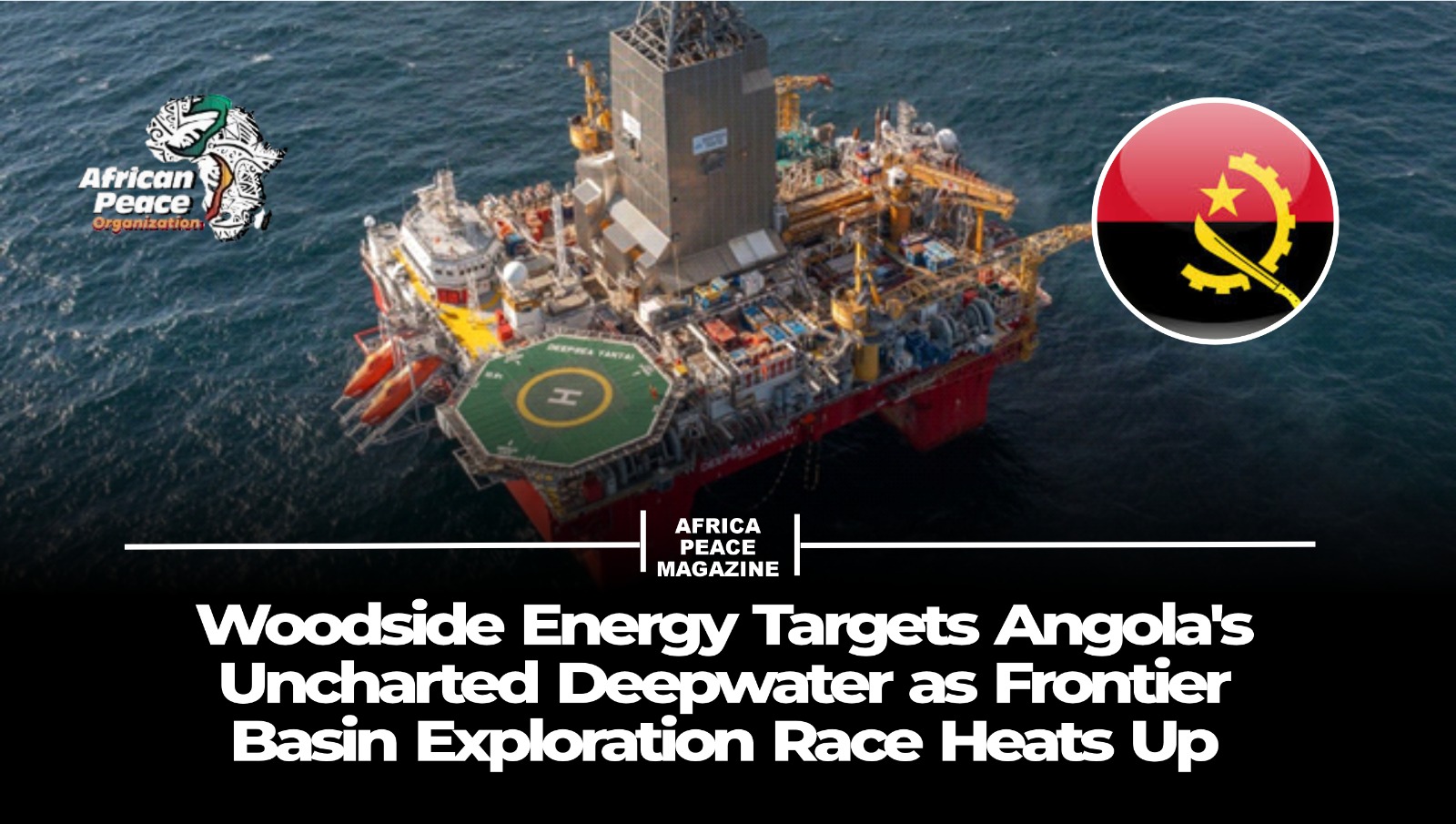
Australia’s Woodside Energy has signed a Memorandum of Understanding (MoU) with Angola’s upstream regulator, the National Oil, Gas & Biofuels Agency (ANPG), to conduct joint geological and geophysical studies across three offshore blocks — Blocks 25, 26, and 43 — in the Namibe-Benguela Basin. The agreement signals fresh interest in Angola’s frontier acreage as the country intensifies efforts to sustain crude production above one million barrels per day.
Under the terms of the MoU, Woodside and the ANPG will jointly assess available 2D and 3D seismic data alongside well reports and related technical information. The studies are intended to strengthen geological understanding ahead of potential licensing and drilling campaigns, and are seen as a precursor to formal exploration commitments.
Angola’s ANPG had carried out a series of technical reassessments of the Namibe-Benguela blocks in 2025 to enhance their investment appeal, and the Woodside agreement builds directly on that work.
A Wave of Frontier Interest
Woodside’s move is part of a broader trend of international operators repositioning toward Angola’s underexplored acreage as mature fields face decline and competition for upstream capital intensifies globally. Earlier this year, TotalEnergies and ExxonMobil signed a Principles Agreement covering four frontier blocks — 40, 41, 42, and 58. Shell returned to the Angolan market in 2025 with a signed agreement for Block 33 alongside Sonangol and Chevron, and further expanded its stake by acquiring 35 percent of deepwater Blocks 40 and 50 from Chevron in early 2026.
Improved seismic imaging and geological comparisons with Brazil’s prolific Santos Basin have strengthened the case for Angola’s pre-salt and deepwater potential, helping to attract operators who had previously moved away from the market. The next phase of the frontier push will require converting study activity into sustained drilling campaigns capable of delivering commercial discoveries.
Source: prospect-intel.com