

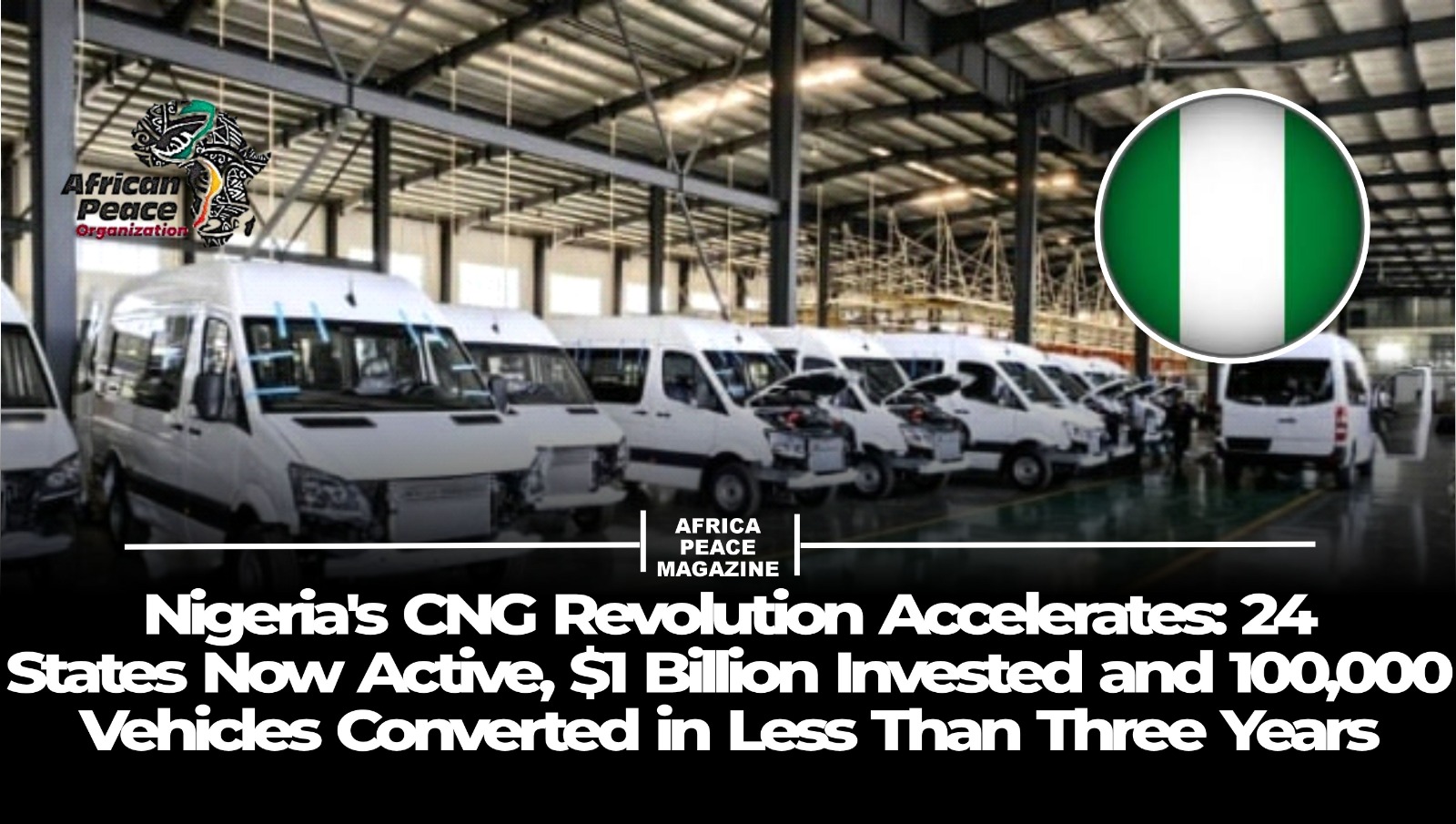
Nigeria’s Compressed Natural Gas programme has reached a transformative milestone, with 24 of the country’s 36 states now actively participating in the national CNG conversion initiative — a scale of geographic rollout that the Presidential Initiative on Compressed Natural Gas and Electric Vehicles describes as among the fastest deployments of its kind anywhere in the world given the economic conditions under which it was achieved.
The Executive Chairman and Chief Executive of the Presidential Initiative, Ismaeel Ahmed, disclosed that over 100,000 vehicles have already been converted to run on CNG, with the overwhelming majority being commercial vehicles — a deliberate policy choice reflecting the government’s intent to reduce transportation costs for ordinary Nigerians following the removal of fuel subsidies. He added that the initiative has attracted over $1 billion in direct private investment into what he described as an entirely new industry: CNG mobility in Nigeria.
The infrastructure buildout underpinning these figures is substantial. Nigeria currently has 72 active CNG refuelling stations — referred to as daughter stations — with a further 175 under development. The country also operates 28 compression stations, with 65 more in development to support virtual gas pipeline distribution. More than 350 conversion centres have been established nationwide, all of them small Nigerian businesses, and over 5,650 technicians have been trained and certified in CNG conversion technologies. Ahmed noted that a parallel emphasis on technician training was essential to ensure that as converted vehicles spread across the country, the mechanical workforce would have the expertise to maintain them.
On the cost advantage driving consumer uptake, Ahmed was unambiguous. CNG is currently priced at between N380 and N450 per standard cubic metre — the energy equivalent of one litre of petrol — compared with petrol prices of N1,300 to N1,350 per litre, representing a saving of roughly 70 per cent per equivalent unit of energy consumed.
The initiative has also deployed 4,318 CNG tricycles, of which 95 per cent were assembled locally, and is now scaling up an electric vehicle pilot programme alongside the CNG rollout. Looking ahead, the government has set ambitious 2027 targets: 2,322 CNG stations nationwide, 3,000 active conversion workshops, one million total vehicle conversions, and 75,000 direct jobs created alongside 300,000 indirect jobs. Ahmed noted that the arrival of major oil and gas companies into the retail CNG supply chain — which has not yet materialised at scale — is expected to dramatically accelerate infrastructure growth when it does.
Source: orientalnewsng.com