

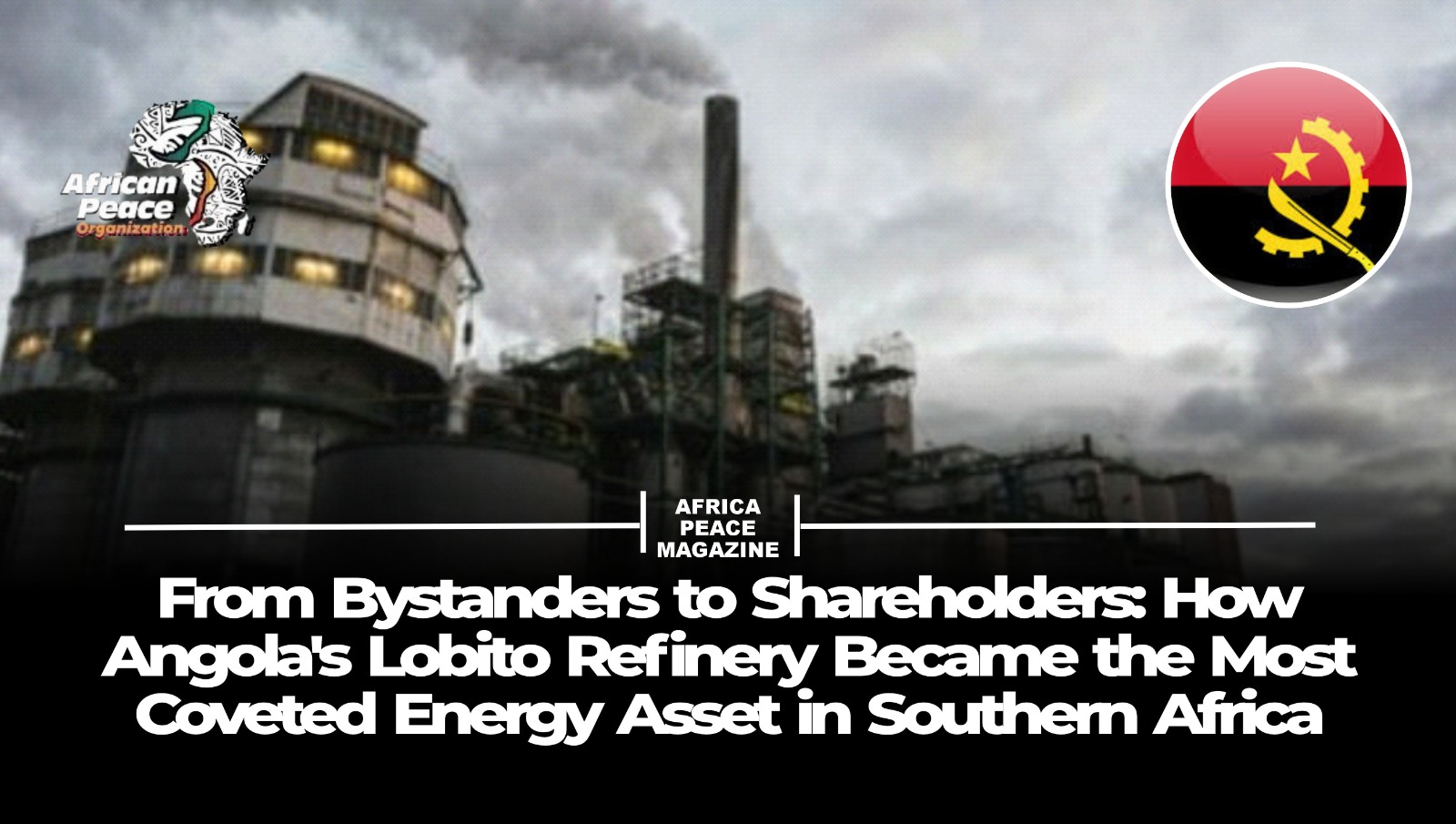
Angola’s $6.6 billion Lobito Refinery has crossed a threshold that few single infrastructure projects in Africa ever reach — it has become a geopolitical object of desire, drawing sovereign governments as aspiring equity partners in a race that blends hard fuel security logic with corridor politics and regional economic positioning.
Designed to process approximately 200,000 barrels per day, the refinery is still under construction and carries an estimated financing gap of roughly $4.8 billion. Angola’s state oil company Sonangol is actively courting both debt and equity partners — including talks with Chinese lenders over a potential multi-billion-dollar financing package — while simultaneously managing inbound interest from neighbouring governments eager to secure a stake.
Angola’s Ministry of Mineral Resources, Petroleum and Gas has positioned the project as a ‘strategic asset for Angola and the region,’ with an ‘open and flexible’ governance model allowing for multi-sovereign participation. Entry is expected on the basis of direct capital contributions, with equity rights, corporate protections and commercial terms to be negotiated bilaterally.
Zambia is the most advanced sovereign participant — reports indicate it has secured a 25 percent stake as part of a broader alignment with the Lobito Corridor strategy. For Lusaka, the logic is structural rather than speculative. As a landlocked copper-exporting economy, Zambia is dependent on costly import routes through South Africa, Tanzania and Mozambique. Owning refinery capacity directly connected to Angola’s Atlantic port of Lobito effectively converts Zambia from a passive fuel consumer into a corridor stakeholder — a position made more valuable by the fact that the Lobito Corridor is now central to US- and EU-backed critical minerals logistics initiatives.
Botswana has signalled interest in acquiring up to 30 percent of the project — one of the most watched and contested developments in the refinery’s evolving ownership structure. As a landlocked economy with no domestic refining capacity, Botswana is fully exposed to imported fuel pricing volatility routed through South African supply chains. Equity in Lobito would provide a long-term structural hedge. However, Sonangol has stated it has not yet received a formal participation request from Botswana, exposing the gap between political announcements and confirmed deal-level engagement.
Gabon’s reported invitation to participate marks a new phase — the entry of an oil-producing exporter rather than a landlocked importer. Gabon’s interest is better read through downstream diversification logic: as a crude producer facing long-term production decline and energy transition headwinds, securing a stake in refining infrastructure would provide future value capture beyond the wellhead and a foothold in an Atlantic-facing logistics corridor tied to Angola’s hub ambitions.
Angola has been equally clear about its governing priority: domestic fuel supply comes first. Output will be ‘carefully planned’ to meet national market needs before honouring regional commitments. Offtake arrangements with equity partners are to be contractually defined and economically sustainable. Balancing Angola’s sovereign supply obligations with the expectations of regional co-investors will be the project’s central governance challenge as it moves from construction toward operation.
Source: prospect-intel.com