

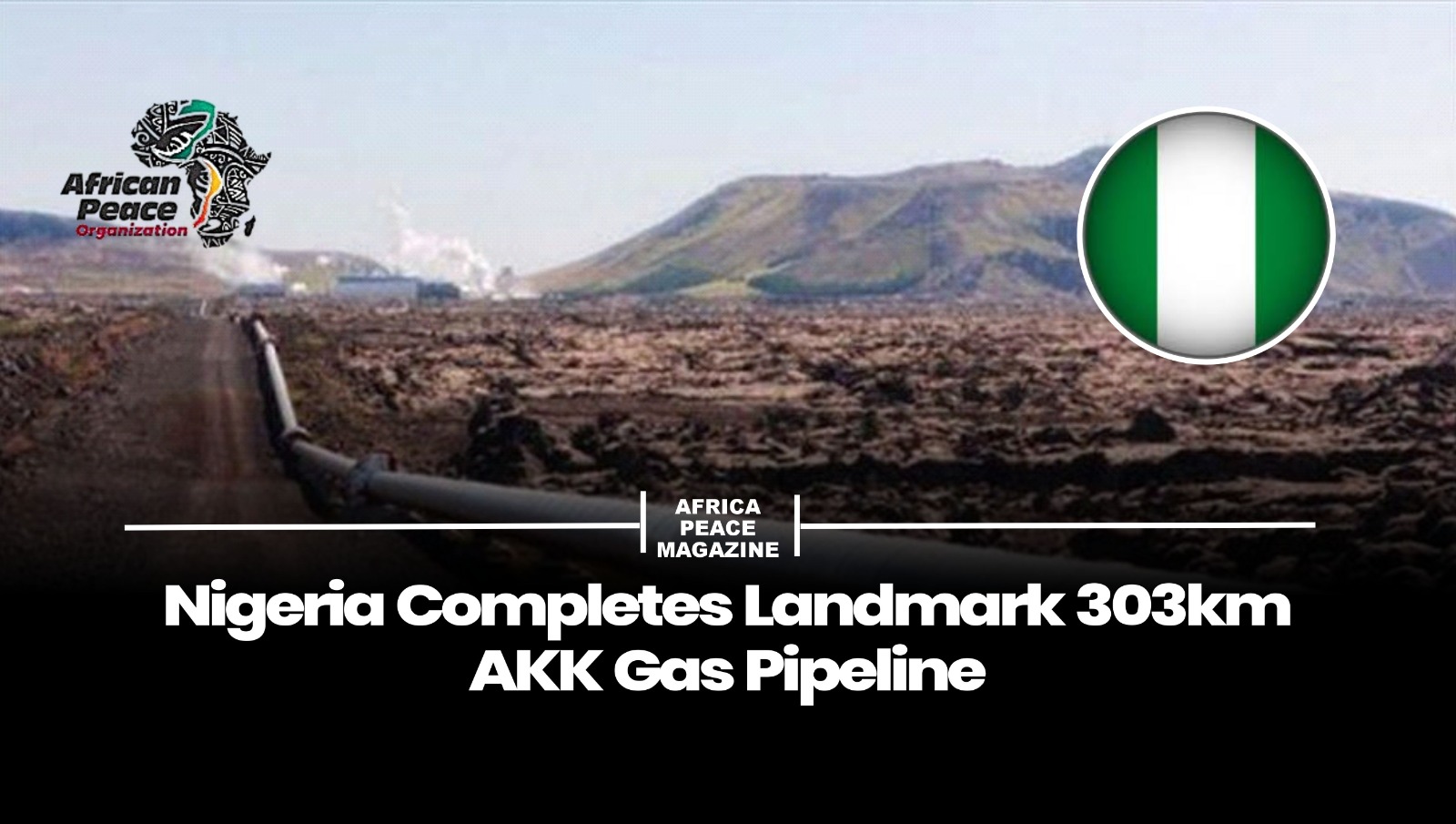
Oilserv, the engineering group owned by Nigerian billionaire Emeka Okwuosa, has completed construction of the 303-kilometre Ajaokuta-Kaduna-Kano gas pipeline, one of the most important pieces of energy infrastructure the country has built.
“We have achieved mechanical completion of the pipeline,” Okwuosa said, represented by the company’s group business development and commercial manager, Cheta Okwuosa. “The entire 303-kilometre stretch from Ajaokuta to Kaduna is ready for gas transportation.” Only the gas treatment facilities at Ajaokuta and Abuja and a handful of block valve stations remain under construction, with completion expected between the end of this year and the first quarter of next.
The AKK pipeline is a centrepiece of Nigeria’s Decade of Gas initiative, aimed at expanding domestic gas use for power generation and industry. It is owned by the state oil company, with Oilserv holding the contract to build a major section — one of the most significant advances yet in moving gas from the producing south to the industrial and power markets of the north.
Okwuosa cautioned that the pipeline alone will not unlock the country’s ambitions, since most of Nigeria’s gas reserves sit in the eastern Niger Delta and a further link — a proposed South-North Gas Pipeline — is needed to feed the AKK system at full capacity. That connection, he argued, would also strengthen the case for Nigeria’s much larger regional export plans, including a proposed pipeline running along the West African coast to Morocco and onward to European networks. Nigeria holds more than 200 trillion cubic feet of proven gas reserves, the largest on the continent, but weak evacuation infrastructure has left much of it stranded.
Okwuosa also warned that security remains the greatest long-term threat to pipeline infrastructure, especially cross-border lines running through parts of West Africa and the Sahel facing rising insecurity. “No private company can independently guarantee the security of strategic national infrastructure. The primary responsibility rests with the country’s security agencies,” he said, adding that Oilserv has deployed artificial intelligence for leak detection, intrusion monitoring and remote surveillance across its pipeline assets.
Source: (billionaires.africa)