

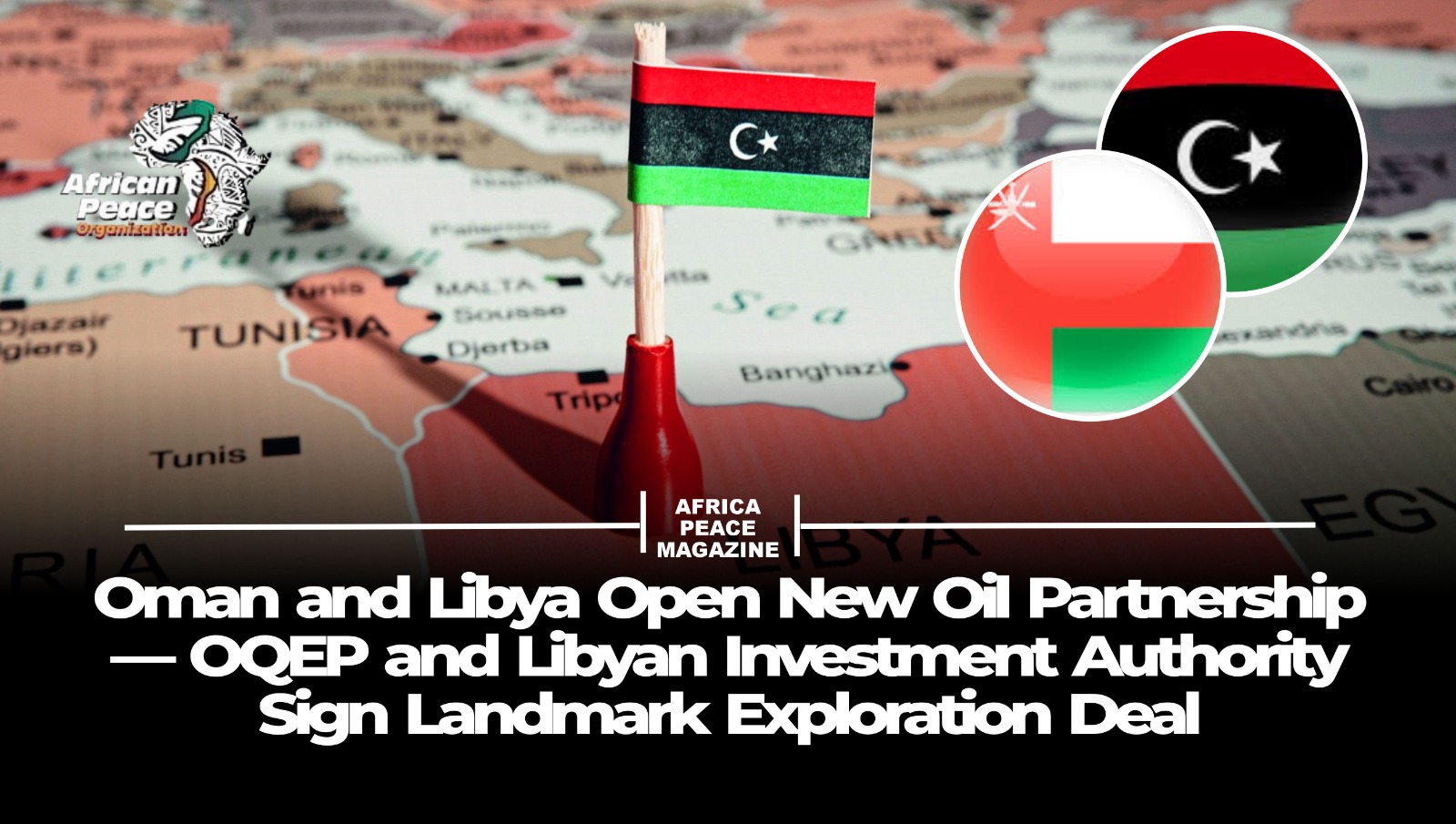
Oman’s OQ Exploration and Production (OQEP) and Libya’s sovereign wealth vehicle, the Libyan Investment Authority, have signed a memorandum of understanding to jointly pursue investment opportunities in the oil and gas sector across Oman, Libya, and international markets — a deal that could deepen energy ties between two of the Arab world’s significant hydrocarbon producers.
The agreement was signed by Ashraf Al-Mamari, chairman of OQEP’s board of directors, and Ali Mahmoud Hassan, chairman and chief executive of the Libyan Investment Authority, in the presence of Abdul Hamid Al-Dbeibeh, prime minister of Libya’s Government of National Unity — a sign of the political weight attached to the accord on the Libyan side.
The framework establishes a basis for collaboration across exploration and production activities in both countries as well as third-party markets. “This memorandum establishes a strategic framework for exploring joint investment opportunities in exploration and production activities in the oil and gas sectors in both brotherly countries, as well as internationally,” Oman News Agency reported, adding that the agreement aims to support the drive toward high-quality partnerships capable of delivering long-term economic value.
For OQEP, the deal is consistent with a clear strategic direction: expanding its international footprint by strengthening its asset portfolio, growing production and reserves, and pursuing investment in promising energy markets beyond Oman’s borders. Libya, which holds Africa’s largest proven oil reserves and occupies a strategic position in regional and global energy trade, represents a natural partner for a company with those ambitions.
The agreement arrives as investment interest returns broadly to Libya, where a gradual improvement in operating conditions and the country’s vast untapped resource potential have begun to attract renewed attention from international energy companies. The MENA oilfield services market, of which Libya forms a growing part, is projected to expand from $34.7 billion in 2026 to $45.7 billion by 2031, reflecting sustained upstream activity across the region.
Global gas production rose 1.2 per cent in 2025, led by North America, the Middle East and Africa, according to the Gas Exporting Countries Forum — a backdrop that underscores the commercial rationale for strengthening oil and gas partnerships between producing states with complementary assets and ambitions.
Source: arabnews.com