

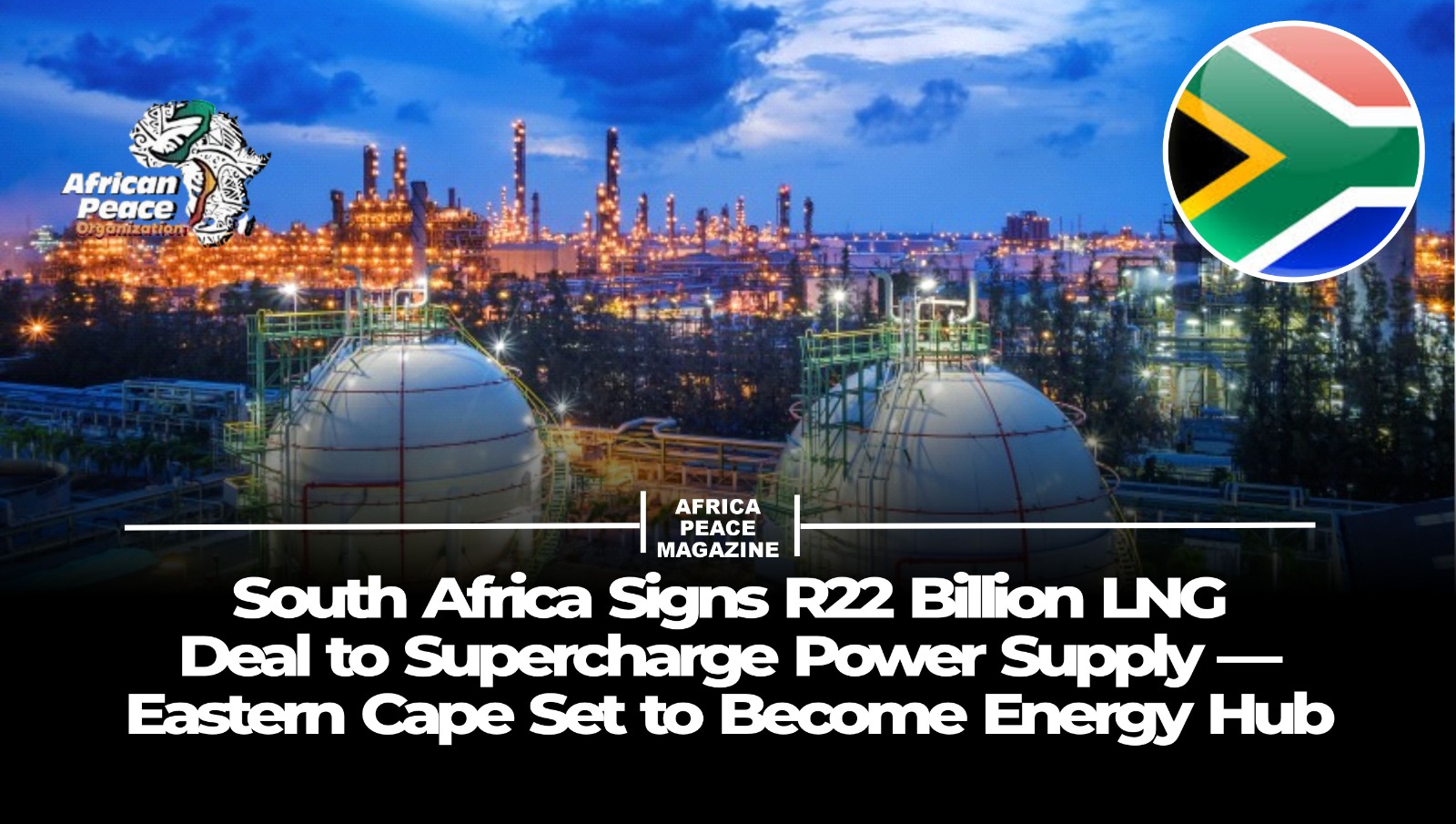
South Africa has taken its boldest step yet toward integrating gas into its electricity grid. Transnet National Ports Authority (TNPA) has signed a 25-year terminal operator agreement with Ukwanda LNG to build an onshore regasification facility at the Port of Ngqura — a project valued at approximately R22 billion that could reshape the country’s energy landscape.
The facility, located within the Coega Special Economic Zone in the Eastern Cape, is designed to underpin South Africa’s planned 6,000 MW gas-to-power programme and deliver up to 3,000 MW of lower-carbon baseload capacity to the national grid. Beyond power generation, the terminal will supply gas to industrial consumers, data centres, and independent power producers, positioning the Eastern Cape as a strategic energy and industrial hub.
Transnet Group CEO Michelle Phillips called the deal a turning point. “This milestone represents a profound shift in how South Africa utilises its commercial seaports to support national energy security,” she said, adding that the agreement establishes the foundational infrastructure needed to support industrial growth and the delivery of reliable, lower-carbon energy.
The project reflects a broader strategic pivot: using liquefied natural gas as a transitional fuel to stabilise electricity supply while renewable energy capacity is scaled up. South Africa’s grid has faced persistent reliability challenges, and gas is increasingly viewed as a flexible complement to intermittent wind and solar power.
Development will begin with a floating storage and regasification unit, alongside construction of permanent onshore infrastructure and a dedicated LNG berth. Full operationalisation is targeted for 2035.
While the project aligns with South Africa’s Just Energy Transition objectives, analysts note it raises longer-term questions about whether gas becomes a structural feature of the energy mix rather than a short-term bridge to renewables. For Transnet, the deal forms part of its wider “Reinvent for Growth” strategy to leverage ports as engines of economic development through public-private partnerships.
Source: prospect-intel.com