

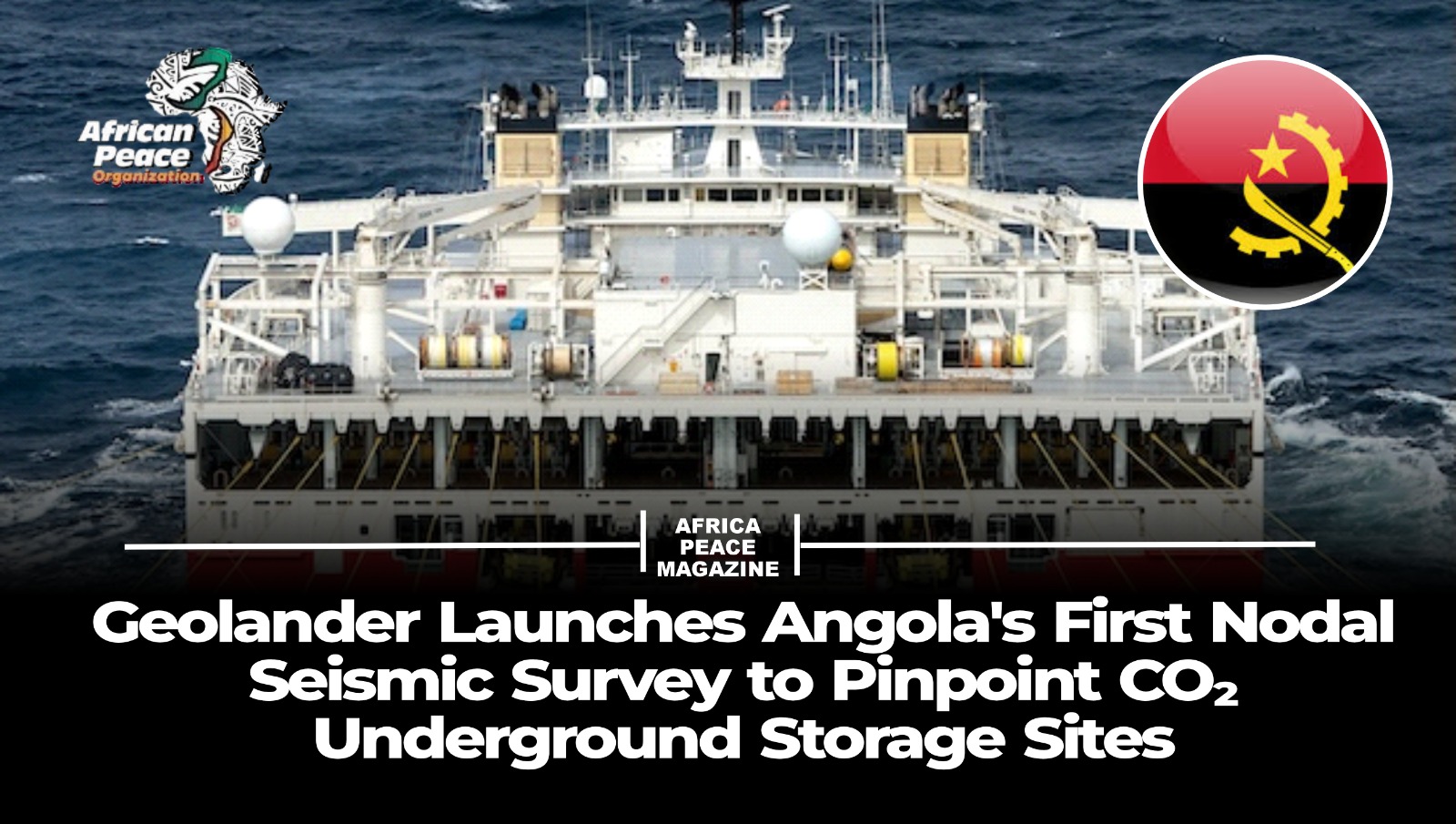
Geolander has commenced an onshore seismic acquisition campaign in Angola, deploying autonomous nodal technology from UK-based STRYDE to generate high-resolution subsurface images that will underpin an assessment of the country’s carbon capture and storage (CCS) potential — a first-of-its-kind deployment for both companies in Angola.
The survey uses closely spaced nodal receivers to capture detailed imaging of reservoir structures, caprock integrity, and fault systems — the three critical factors that determine whether a geological formation can safely contain injected CO₂ over the long term. The high-density data acquisition approach delivers significantly improved resolution of subsurface features compared to conventional seismic methods, which is particularly important for CCS applications where containment certainty is paramount.
Peritue Miguel, General Manager of Geolander, said STRYDE’s nodal system has allowed the company to optimise crew size and logistics while maintaining an efficient survey pace, and that its compact design makes it well suited for the high-density deployments needed to capture subtle geological features. Víctor Villamizar, Head of Business Development at STRYDE, noted that the Angola campaign marks the company’s first in the country and is focused on delivering the high-quality data needed to underpin subsurface evaluation for CCS.
The project reflects the broader global momentum behind CCS as a tool for managing emissions from existing hydrocarbon infrastructure. As activity in the sector expands worldwide, operators are placing increasing emphasis on high-resolution seismic data to reduce uncertainty in site selection and inform development and regulatory decisions before significant capital is committed.
Source: worldoil.com